
September 2017 through November 2017 Highlights for the West
December 31, 2017 - NOAA’s recap of significant weather events for September 2017 through November 2017 finds the following:
Northwest near to slightly wetter than normal; Southwest much drier than normal.
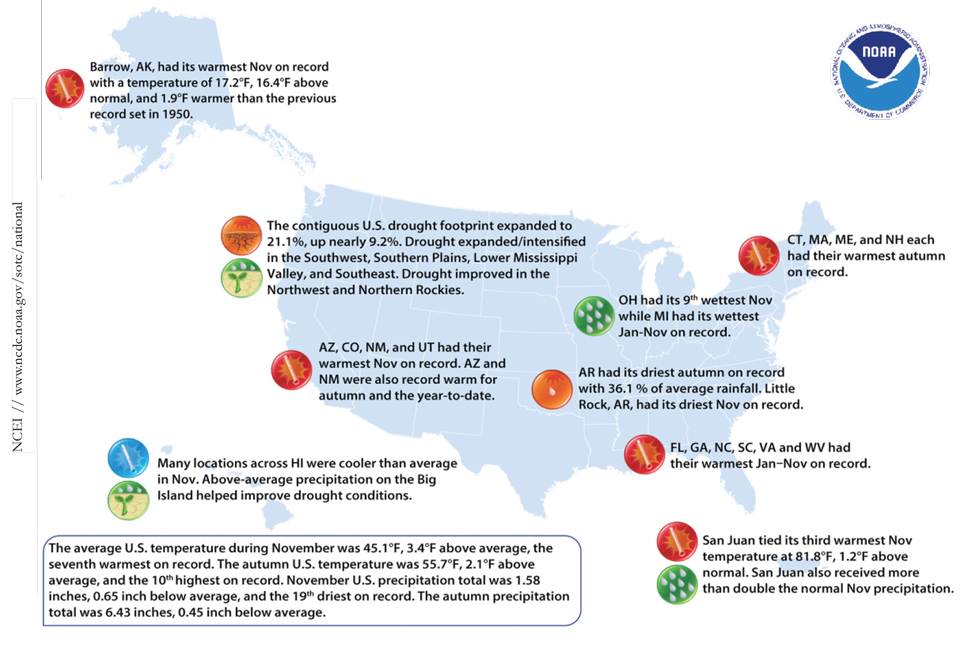
AZ and NM observed warmest autumn on record; CO and CA among top-10 warmest.
AZ reported 3rd driest autumn on record.
USDM shows improvement of drought conditions in western MT, ID, WA, OR and degredation of conditions in AZ, NM, southern UT, southwestern CO.
Early season snowpack in northern Cascades/northern Rockies near to above normal, other mountain ranges observed below normal snowpack.
Large and destructive fires impacted many areas of West well into autumn.
La Niña conditions are present and expected to persist through the winter season.
Regional Overview for September 2017 through November 2017
Mean Temperature Percentile: September-November 2017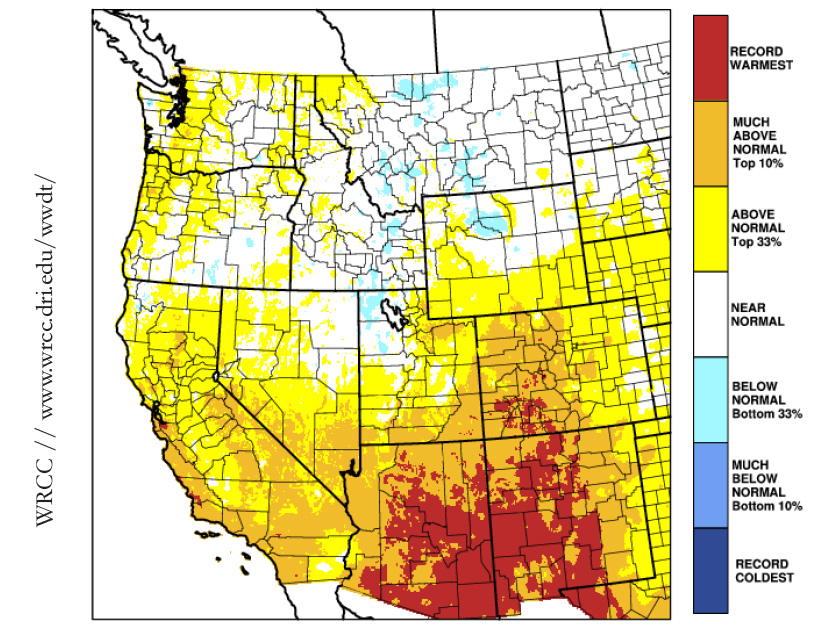
Autumn temperatures were well above normal across the Southwest. November was particularly warm; all of the Four Corners states observed their warmest November on record. The autumn season also featured significant heat waves in the Southwest, with southern California being particularly affected. Standout events include early September as well as a period over the Thanksgiving holiday. Well above normal temperatures contributed to dangerous fire weather. Stormy conditions helped to moderate temperatures across the northern tier of the region, resulting in near-normal temperatures.
Precipitation Percentile: September-November 2017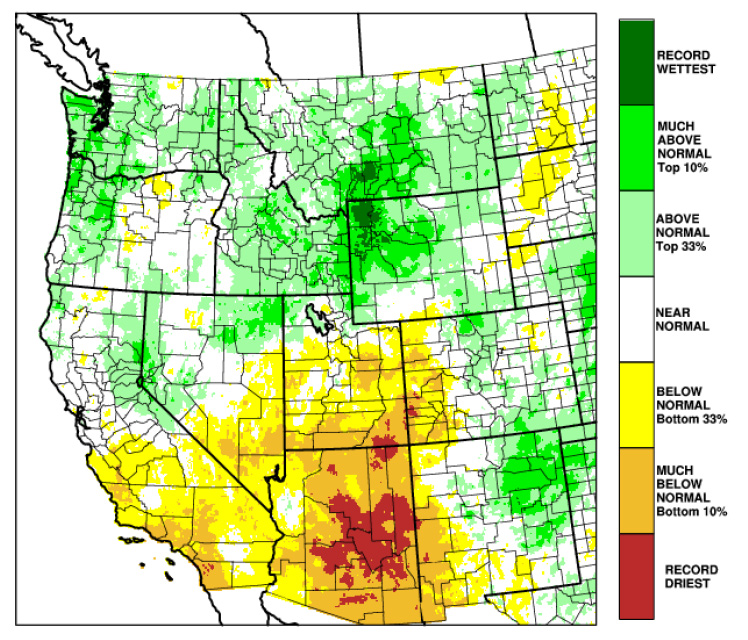
Though it is early in the precipitation season, the observed pattern this autumn of wetter than normal conditions in the Northwest and drier than normal conditions in the Southwest reflects the pattern often seen during historical La Niña events. October featured one very strong storm impacting the far northwest part of the region, followed by a wet November extending southward into the Sierra Nevada. Snow levels remained high for the Sierra and southern Cascades, limiting snowpack accumulation to high elevations. Dry weather dominated across the Southwest, causing expansion of drought conditions in the USDM.
U.S. Drought Monitor: November 28, 2017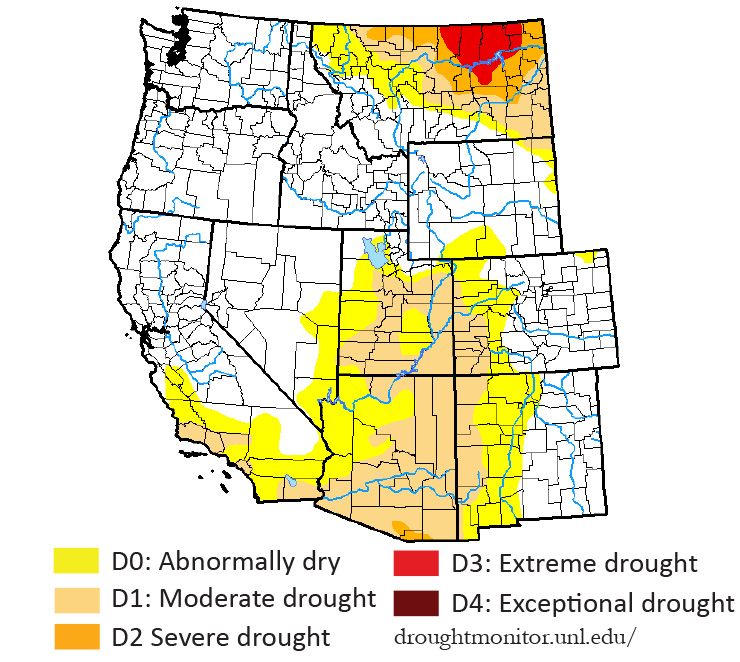
Autumn precipitation helped to alleviate drought conditions in the Northwest. Over this three month period, all drought or abnormally dry conditions were removed from WA, OR, and ID. Significant improvements were also made in MT, where only 53% of the state was experiencing drought conditions at the end of the season, compared with 91% at the start. With anomalously warm/dry weather, drought conditions expanded in the Southwest, especially in southern UT and along the AZ-NM border. At the end of the season, 21% of the West was experiencing moderate or worse drought conditions.
Regional Impacts for September 2017 through November 2017
Weather
Several heat waves impacted portions of CA resulting in school closures and prompting opening of cooling centers.
Los Angeles Dept. of Water and Power reported record high electricity demand during early Sept. heat wave
Drought, Flooding and Water Resources
Early season snowfall and wet autumn helped alleviate drought conditions and slow wildfire activity in MT.
Anomalously warm and dry conditions in western NM caused irrigation season to extend into fall, raises drought concerns.
Slow start to snowpack in Sierra, central/southern Rockies raises concern about developing drought, ski industry impacts.
Agriculture and Fisheries
Severe thunderstorms on Oct. 1 caused major damage to agriculture (pumpkin, squash, chiles) in Valencia County, NM.
Soggy soil conditions prevented ID farmers from planting 114,000 acres; typical affected area is ~20,000 acres.
Bottom fishing closures near Charleston, OR, have had devastating impacts on businesses in the area.
Wildfire
Wildfires in the Northwest produced hazardous air quality for many areas, including metropolitan areas of Portland, Seattle.
Many large fires in West in summer and autumn strained firefighting resources; MT particularly impacted.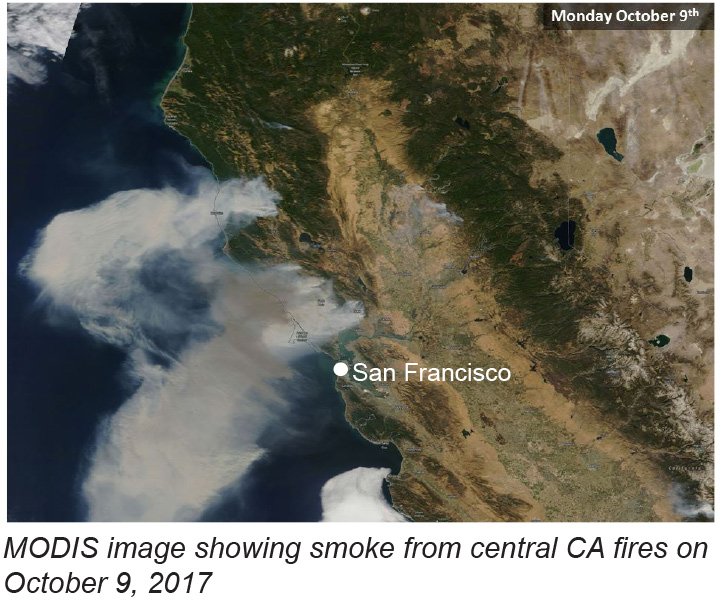
Destructive Central California Fires
Following a hot, dry summer and before the onset of wetting rains, a “Diablo” wind event (dry northeasterly downslope winds) produced extremely hazardous fire weather conditions. Fuel moisture was at nearrecord low values, and with strong winds, several fires grew rapidly when ignited. The Atlas, Tubbs, and Nuns fires collectively burned over 140,000 acres in Napa, Solano, and Sonoma Counties. Approximately 10,000 firefighters from across CA and the U.S. were involved in fire suppression efforts. The Tubbs Fire became the most destructive in California history, destroying 5,643 structures and causing 22 deaths. The Nuns Fire was the 6th most damaging at 1,355 structures and two deaths. The Atlas stands at the 11th most destructive, with 781 structures destroyed and six deaths. Smoke from the fires produced poor air quality in the heavily populated San Francisco Bay Area. The fires have impacted the viticulture and cannibis agricultural industries in the affected counties, as well as the wine and tourism industries. According to the CA State Insurance Commissioner, insured loss estimates from the fires exceed $1 billion.
Source: NOAA