

January 21, 2024 - With cooling winter temps, winter frost threatens trees and shrubs beyond the usual mountainous areas. Record-low temps in Central Valley and coastal areas can harm buds, fruit, leaves, and twigs. Protect your trees and shrubs with these tips from CAL FIRE's Urban and Community Forestry Program to ensure a healthy winter!
In the Golden State, where winter frost can sneak into unexpected corners, even those accustomed to milder climates find their trees and shrubs under threat. Recent weather trends have extended the icy reach beyond the usual mountainous areas, bringing record or near-record low temperatures to the typically temperate Central Valley and coastal areas. Temperatures below 32 degrees Fahrenheit over a sustained period are cold enough to freeze your trees’ buds/blossoms, fruit, leaves, and twigs. Young trees and tender new growth are most susceptible to injury from freezing temperatures. To ensure the robust health of your woody plants, it's important to fortify them against the chilling grip of winter. In the spirit of the CAL FIRE Urban and Community Forestry Program’s mission to create and sustain urban trees across the state, this guide provides simple and effective steps to safeguard your shrubs during the winter months.
- Opt for Resilient Varieties:
When selecting shrubs and trees for your California garden, make choices that stand up to the local climate. Consult with the experts at nearby nurseries to pinpoint varieties that are naturally resistant to frost and thrive in the diverse conditions of our state. Find your US Department of Agriculture (USDA) cold hardiness zone by contacting your local University of California County Extension (UCCE), county agricultural offices, garden center, or at planthardiness.ars.usda.gov. Select species with a number the same or less than your zone. Be on the lookout for species in your yard that are susceptible to frost, like Citrus, Oleander, Jacaranda, and other tropical and subtropical plants, and take proactive steps to protect these plants.
- Mulching:
Give your trees and shrubs a cozy blanket of organic mulch around their bases to shield the soil from the winter chill. Mulching not only retains moisture but also moderates temperature fluctuations, insulating the roots and providing a crucial barrier against frost. Straw, bark, or compost can be layered around the plant, leaving a six-inch gap around the stem to avoid rot. It’s also important to remember to keep potentially flammable much out of the five-foot radius of your home. This helps to provide a boost your home’s defensible space from wildfires. Learn  more about defensible space HERE.
Photo on the right. Source: CA Urban Forests Council
- Watering practices:
Well-hydrated plants are more resilient to freezing temperatures. Water your trees and shrubs comprehensively before an expected frost, as moist soil retains more heat from solar radiation than dry soil and will re-radiate heat during the night. Be cautious not to overwater, as saturated soil can lead to its own set of problems (disease/rot etc.). That said, water in California is a precious resource. Use water-saving practices like recycling indoor water to take care of your trees and shrubs efficiently. Learn more about efficiently using water in the garden HERE.
- Wrap Them Up:
Invest in frost blankets or use burlap, sheets, tarps, etc. to swaddle your trees and shrubs during the coldest nights. Loosely secure the covers to allow air circulation while insulating against the cold. Ground-hugging covers effectively trap heat and foil frigid air. Remember to unveil your plants during the day to let them bask in sunlight and fresh air. Also, use a frame or stakes to minimize contact between the cover and the foliage.
- Strategic Planting:
Choose planting locations that naturally shield your woody plants from frost. Plant frost-sensitive plants near sources of reflective heat such as structures like buildings or walls. Avoid low-lying spots where cold air tends to gather.
- Heat on Standby:
Introduce temporary heat sources around your shrubs, such as outdoor-rated string lights or frost cloth propped up by stakes. These sources emit a modest amount of heat, creating a microclimate that wards off the frost on chilly nights.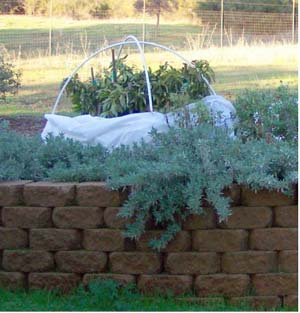
Photo on the right. Source: UCCE Master Gardeners of Sacramento
- Help trees and shrubs recover after a freeze:
Wait until spring after the danger of frost has passed to see what sprouts before pruning off anything that seems dead or damaged. The damage is often not as bad as it initially appears, and new growth may sprout from tissue believed to be dead. However, if dieback is severe enough, remove dead, dying, or damaged branches. Contact an ISA-certified arborist to assess the health of the tree.
- Meteorological Vigilance:
Stay abreast of upcoming weather conditions, particularly frost warnings. Utilize weather apps or consult local forecasts to plan and implement protective measures when needed.
- Care for Your Plants with Purpose:
Schedule your pruning sessions to remove dead, dying, or damaged branches for late winter through early spring or late summer through early fall to eliminate dead or damaged branches. Proper pruning enhances air circulation, diminishing the risk of frost damage. Avoid late-season pruning, which can stimulate vulnerable new growth. Maintaining healthy trees and shrubs also helps to enhance your property’s defensible space against the threat of wildfire. Ensure your plants are healthy and well-watered year-round to keep them resistant to weather damage and other risks. Find an ISA certified arborist to assess tree health.
By weaving these strategies into your winter gardening routine, you can effectively shield your shrubs from the biting chill of California's winter. Regular monitoring, timely intervention, and thoughtful plant choices will contribute to the overall vitality and resilience of your garden during the colder months.
Learn more about how frost forms HERE.
Find more information about how to properly care for trees in the urban environment or find an ISA certified arborist at treesaregood.org.
Source: CAL FIRE