
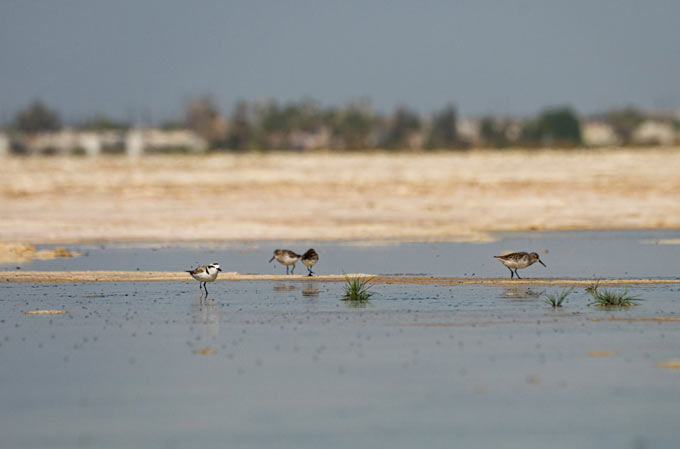
Snowy Plover and sandpipers at the Salton Sea near Niland, California. Photo: Sydney Walsh/Audubon
May 26, 2025 - Sacramento, Calif - The California Wildlife Conservation Board (WCB) has approved a grant of $5,231,066 towards Audubon California’s Bombay Beach Wetland Enhancement projects, a critical step in restoring and expanding 564 acres of wetland habitat at the Salton Sea. This project, located near the lakeside community of Bombay Beach, is a cooperative effort with the California Department of Water Resources, Imperial Irrigation District and the Bureau of Reclamation, and will help restore a vital stopover for millions of migratory birds traveling along the Pacific Flyway, including habitat for the endangered Yuma Ridgway’s Rail and desert pupfish.
The Bombay Beach Wetland Enhancement project addresses an urgent need to stabilize and restore wetland habitats at the Salton Sea. The project will enhance existing “emergent” wetlands, where desert spring outflows spill onto exposed lakebed; expand habitat in those areas; help control windblown dust; and create public access opportunities in the future.
“This grant is a monumental investment in the future of the Salton Sea, both for the wildlife that depend on it and the communities that surround it,” said Andrea Jones, director of bird conservation and interim executive director of Audubon California. “The Salton Sea is a critical stopover for migratory waterbirds, and this project will ensure that these wetlands continue to provide refuge for species facing habitat loss and climate change challenges.”
"As the Salton Sea continues to face challenges, timely, well-designed projects like this are essential—not only for restoring ecological function, but also for building long-term resilience in frontline communities,” said Camila Bautista, Salton Sea and desert program manager for Audubon California. “Residents of the Imperial and Coachella Valleys already have high rates of dust-caused respiratory ailments and yet have little access to outdoor activities. This project will directly benefit local communities and turn the Sea into an asset for them.”
The project will include the stabilization of beach berms, construction of flow structures to manage water distribution, and creation of micro-catchments to support runoff. Long-term management will be overseen by the Salton Sea Conservancy under the California Natural Resources Agency’s Salton Sea Management Program, with monitoring by the California Department of Fish and Wildlife.
Source: Audubon