
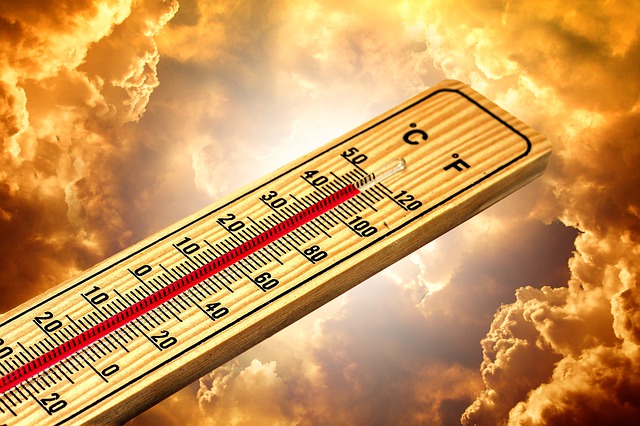
Image by Gerd Altmann from Pixabay
August 3, 2025 - As the United States faces yet another summer of record-breaking temperatures, the threat to lowincome families is immediate and life-threatening. Earlier this week, more than 185 million Americans—stretching from the East Coast to the Central U.S.—were living under heat advisories. In the face of this crisis, the National Energy Assistance Directors Association (NEADA), which represents state program managers of the Low Income Home Energy Assistance Program (LIHEAP) and the Center on Energy, Poverty and Climate (CEPC), are calling on the nation’s utilities to voluntarily suspend shut offs this summer for households unable to pay their energy bills.
Extreme heat is not just uncomfortable—it is deadly. Prolonged exposure to high temperatures can lead to severe health consequences, particularly for seniors, children, and those with chronic medical conditions. In homes without air conditioning, the risk multiplies. Almost 20 percent of very low-income families lack access to cooling. For them, even staying indoors can become dangerous when outside temperatures climb and air quality deteriorates. Opening windows or using fans offers little relief—and when heat waves last for days or weeks, the consequences can be fatal.
Yet despite this growing threat, many utilities continue to disconnect electricity due to nonpayment during the summer. Currently, only 26 states and the District of Columbia offer any form of cooling assistance. Even fewer—just 17 states plus D.C.—have policies protecting low-income families from utility disconnections during summer months. That leaves 33 states where no such protections exist. As a result, millions of Americans face the very real possibility of enduring dangerous heat without power, simply because they are poor. Cooling is not a luxury—it is a medical necessity.
The current infrastructure of federal and state energy assistance is ill-equipped to meet the need. LIHEAP is the nation’s primary program to help low-income households pay energy bills, but it remains chronically underfunded for summer cooling. Roughly 85% of LIHEAP resources are used for heating, leaving little support for households struggling to stay safe in the summer. Without new investments, states must choose between helping families survive the winter or the summer. That is not a choice we should be forced to make.
Congress must act now. As the FY 2026 appropriations process begins, we are urging lawmakers to provide at least $2 billion in additional funding for summer cooling assistance. This emergency allocation would allow states to provide supplemental LIHEAP aid to approximately six million households, covering bill assistance as well as critical air conditioning repairs or replacements. No family should be forced to choose between food and cooling—or be driven from their home to a public cooling center simply to survive.
According to Mark Wolfe, Executive Director of NEADA and Co-Director of CEPC, “We should treat access to cooling just like we treat access to heating in the winter—we should expect extreme temperatures and develop affordability programs and regulations that help low-income families stay safe and in their homes.”
Source: NEADA