
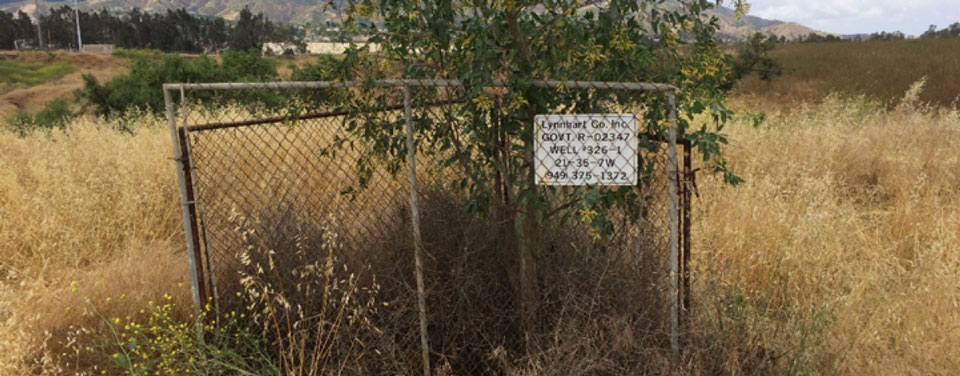
Orphaned well Credit: BLM
Measure to Guard Against Taxpayer Bailouts Heads to Senate
May 29, 2026 - SACRAMENTO, Calif.— The California Assembly on Thursday passed a bill that would clarify financial requirements for companies acquiring oil and gas wells. The requirements will help ensure more oil and gas wells get plugged by the industry and not taxpayers. The bill passed after a 53-21 vote.
“Californians are one step closer to holding oil companies accountable for cleaning up their dangerous wells,” said Hollin Kretzmann, an attorney at the Center for Biological Diversity’s Climate Law Institute. “When companies leave behind dangerous leaky wells, it puts our health, air and water at risk. We can’t leave the people of California on the hook for cleaning up the mess created by one of the world’s most profitable industries.”
Introduced by Assemblymember Gregg Hart (D-Santa Barbara), A.B. 2461 would clarify the original intent of A.B. 1167, a 2023 law requiring any company that acquires control over an oil or gas well to submit a bond or other financial assurance that covers the full cost of cleanup. If the operator goes bankrupt or is otherwise unable to pay for cleanup, the state can rely on the bond instead of taxpayer funds to plug it.
“It’s outrageous that taxpayers have already paid hundreds of millions of dollars to clean up wells left behind by the industry,” said Victoria Rome, director of California governmental affairs at Natural Resources Defense Council (NRDC). “We need to make sure companies can’t wriggle out of their cleanup obligations by passing around wells from one company to another. Requiring bonds and other financial assurance up front is essential to protecting the public from the industry’s astronomical well plugging costs.”
Oil companies are legally obligated to plug their old wells, but they often transfer them to other companies, which then can go bankrupt or desert the wells. In recent years, the public has spent hundreds of millions of taxpayer dollars to clean up wells in California deserted by oil and gas companies.
A.B. 1167, the Orphan Well Prevention Act, addresses this problem by requiring oil companies submit a bond any time they take control of an oil well. Despite lawmakers’ objections, regulators refused to apply the law to certain types of transactions, letting oil companies off the hook. This exposed California taxpayers to billions in liabilities. A.B. 2461 clarifies that every time an oil well transfers ownership — including through a stock transaction — the company will have to submit a bond to cover end-of-life cleanup costs. It would also eliminate A.B. 1167’s exemption for the comparatively small number of higher producing wells, streamlining agency oversight.
“It’s quite reasonable to make sure that oil companies foot the bill for cleaning up the oil wells that endanger our neighborhoods, instead of the residents who have to live with the pollution from these wells,” said Laura Deehan, state director for Environment California. “We thank the Assembly for strengthening the law and urge the Senate to swiftly pass this bill too.”
California has more than 87,000 oil and gas wells that will eventually need to be cleaned up. And according to the California Geologic Management Division, it can cost between $220,000 to $900,000 to plug and abandon a single well. The total cost of cleanup could be roughly $21.5 billion. Yet according to recent state data, oil and gas companies have only provided bonding for about $156 million — less than 1% of the cost.
Wells that stay unplugged and idle pose a threat to public health and safety. By one estimate, about two-thirds of idle unplugged oil and gas wells in California leak methane, an explosive super-pollutant over 80 times more climate-heating than carbon dioxide. They can also leach dangerous, cancer-causing chemicals into the air and water. At least 4,449 idle wells are currently near a school, childcare facility, eldercare center, park, playground or hospital, according a recent Center for Biological Diversity analysis, putting California’s most vulnerable populations at risk.
A.B. 2461 is sponsored by the Center for Biological Diversity, NRDC, and Environment California and is endorsed by more than 60 environmental and public health and labor organizations.
The bill now heads to the Senate later this year.
The Center for Biological Diversity is a national, nonprofit conservation organization with more than 1.8 million members and online activists dedicated to the protection of endangered species and wild places.
Source: Center for Biological Diversity