
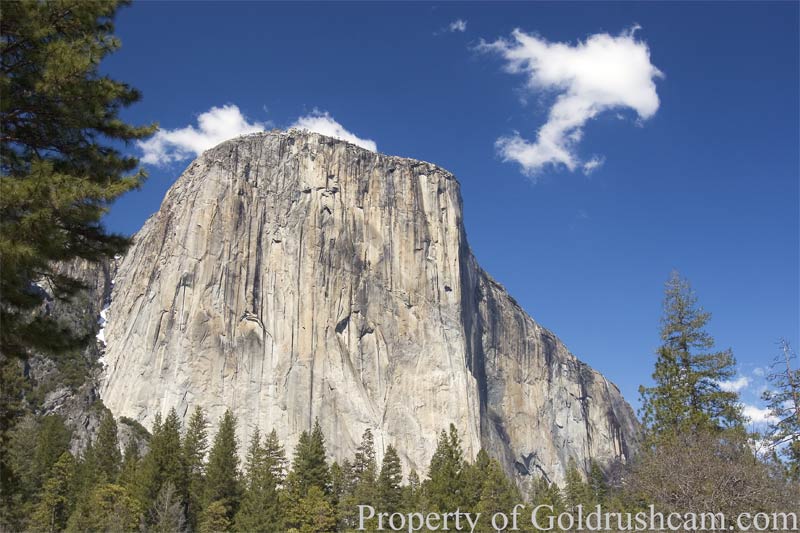
El Capitan in Yosemite National Park Sierra Sun Times file photo
August 11, 2026 - On Monday, the Coalition to Protect America’s National Parks sent the following letter to the National Park Service:
ELECTRONIC TRANSMISSION – NO HARD COPY TO FOLLOW
Comments submitted at: https://www.regulations.gov/commenton/NPS-2026-0101-0001
August 10, 2026
Michael Michener
Deputy Associate Director, Visitor and Resource Protection
National Park Service
1849 C Street NW, MS–2457
Washington, DC 20240
Subject: Comments on Director’s Order (DO) 41: Wilderness Stewardship, Section 7.2 (draft) and Reference Manual (RM) 41: Wilderness Stewardship, Section 7.1 (draft)
Dear Mr. Michener:
The Coalition to Protect America’s National Parks (Coalition) is comprised of over 5,100 members, all of whom are retired, former, or current National Park Service (NPS) employees or volunteers who collectively represent more than 50,000 years of national park management experience. The Coalition studies, educates, speaks and acts for the preservation of America’s National Park System. Among our members are former NPS directors, regional directors, superintendents, resource specialists, park rangers, maintenance and administrative staff, and a full array of other former employees, volunteers, and supporters.
We appreciate the NPS’s ongoing efforts to effectively manage and minimize the impacts of recreational activities, including climbing, in NPS wilderness areas. Given the mandates of the EXPLORE Act Section 122 1 , we understand the need for NPS to update and clarify its wilderness climbing policies now. We offer the following comments on Level 2 policy DO-41 Section 7.2 (draft) and Level 3 policy RM-41 Section 7.1 (draft) for your consideration.
INTRODUCTION
In 2025, the Expanding Public Lands Outdoor Recreation Experiences (EXPLORE) Act 2 was signed into law (Pub. L. 118-234). Section 122 of the Act, Protecting America’s Rock Climbing (PARC), addresses recreational climbing and is codified at 16 U.S.C. 8422. Specifically:
-
Section 122(a) of the Act, titled “ In General,” provides that not later than 18 months after the date of the enactment of this title, each Secretary concerned shall issue guidance for recreational climbing activities on covered Federal land .”
-
Section 122(c), titled “ Wilderness Areas,” recognizes that “ recreational climbing (including the use, placement, and maintenance of fixed anchors) is an appropriate use within a component of the National Wilderness Preservation System.” (Emphasis added)
-
Section 122(d), titled “ Authorization, ” provides that “ [t]he guidance issued under subsection (a) shall describe the requirements, if any, for the placement and maintenance of fixed anchors for recreational climbing in a component of the National Wilderness Preservation System.” (Emphasis added)
-
Section 122(e), titled “Existing Routes,” provides for “the continued use and maintenance of recreational climbing routes (including fixed anchors along the routes) in existence as of the date of the enactment of this title .” Note: The date of enactment was January 4, 2025.
In effect, these sections of the EXPLORE Act authorize the use of fixed anchors for recreational climbing in wilderness, subject to any terms and conditions determined by the responsible Secretary. Most notably, the above sections of the EXPLORE Act do NOT authorize the use of power drills to install fixed anchors in wilderness, which we will discuss in more detail later in these comments. Similarly, the Act does NOT authorize the installation of “fixed equipment. ”
LEGAL AND POLICY BACKGROUND
The NPS Organic Act of 1916 as amended established the fundamental purpose of units of the National Park System, which is
“ to conserve the scenery and the natural and historic objects and the wild life therein and to provide for the enjoyment of the same in such manner and by such means as will leave them unimpaired for the enjoyment of future generations” (54 USC § 100101(a) ).
Courts have consistently interpreted the Organic Act as giving conservation priority over use such that “ when there is a conflict between conserving resources and values and providing for enjoyment of them, conservation is to be predominant ” (NPS Management Policies 2006 §1.4.3) In this case, wilderness climbing, especially the installation of fixed anchors, has the potential to adversely impact wilderness character. Therefore, NPS must restrict such activities to the extent necessary to prevent impairment of park resources and values, including wilderness character.
The Wilderness Act 3 , Section 2(c), defined wilderness, in contrast with those areas where man and his works dominate the landscape, as an area where the earth and its community of life are untrammeled by man, where man himself is a visitor who does not remain. An area of wilderness is further defined in the Act to mean an area of undeveloped Federal land retaining its primeval character and influence, without permanent improvements or human habitation, which is protected and managed so as to preserve its natural conditions and which (1) generally appears to have been affected primarily by the forces of nature, with the imprint of man’s work substantially unnoticeable; (2) has outstanding opportunities for solitude or a primitive and unconfined type of recreation; (3) has at least five thousand acres of land or is of sufficient size as to make practicable its preservation and use in an unimpaired condition; and (4) may also contain ecological, geological, or other features of scientific, educational, scenic, or historical value.
In this case, the installation of bolts in wilderness meets the definition of “trammeling action” described in Appendix 6 of Keeping It Wild 2 4 , which is: “A trammeling action is defined as an action that intentionally manipulates ‘the earth and its community of life’ inside a designated wilderness.” In brief, climbers intentionally drill holes in the rock face and leave bolts behind in wilderness in order to manipulate the environment to their advantage for the purpose of recreational climbing. Therefore, NPS must restrict such activities to the extent necessary to prevent adverse impacts to wilderness character.
In addition, the Wilderness Act, Section 4(c) prohibited certain use(s) in wilderness “ except as necessary to meet minimum requirements for the administration of the area for the purpose of this Act.” (Emphasis added) Prohibited actions include the use of motorized equipment, which in the context of wilderness climbing would include the use of power drills to install fixed anchors (i.e., bolts). The above reference to “minimum requirements for the administration of the area” in Section 4(c) provides the basis for the NPS minimum requirements analysis (MRA) process, which we will discuss later in this letter.
NPS regulations in Title 36 of the Code of Federal Regulations (CFR) that are relevant to the issue of climbing in wilderness include the following sections:
-
36 CFR § 1.5 5 Closures and Public Use Limits – This section provides park superintendents with the authority to: Impose public use limits, or close all or a portion of a park area to all public use or to a specific use or activity; designate areas for a specific use or activity, or impose conditions or restrictions on a use or activity; terminate such restrictions or use limits; and to establish a permit, registration, or reservation system in order to implement a public use limit.
-
36 CFR § 1.6 6 Permits – This section establishes procedures for issuing permits, which “shall include terms and conditions that the superintendent deems necessary to protect park resources or public safety.”
-
36 CFR § 2.1 7 Preservation of Natural, Cultural, and Archeological Resources – This section prohibits “possessing, destroying, injuring, defacing, removing, digging, or disturbing from its natural state” a variety of natural features including “plants or the parts thereof” and “mineral resources or the parts thereof.” In the context of recreational climbing, this regulation generally prohibits the removal or disturbance of vegetation, soil, and other natural materials from climbing routes, including new routes that are in the process of being developed by climbers.
-
36 CFR 2.12 8 Audio Disturbances – This section prohibits “operating motorized equipment… in a manner that exceeds a noise level of 60 decibels measured on the A-weighted scale at 50 feet; or, if below that level, nevertheless, makes noise which is unreasonable, considering the nature and purpose of the actor’s conduct, location, time of day or night, purpose for which the area was established, impact on park users, and other factors that would govern the conduct of a reasonably prudent person under the circumstances.” Note: A standard cordless drill generally operates in a range of 78 to 90 dB 9 , depending on the hardness of the material being drilled into. Drilling into denser, harder stones like granite or quartzite creates a higher-pitched, more abrasive screech and requires more tool power, increasing the harshness and decibel level of the sound made by the drill.
NPS Management Policies 2006 10 constitute NPS Level 1 policy guidance:
— Chapter 1 of Management Policies , titled “The Foundation,” includes the following provision:
-
1.4.3 The NPS Obligation to Conserve and Provide for Enjoyment of Park Resources and Values – Congress, recognizing that the enjoyment by future generations of the national parks can be ensured only if the superb quality of park resources and values is left unimpaired, has provided that when there is a conflict between conserving resources and values and providing for enjoyment of them, conservation is to be predominant. This is how courts have consistently interpreted the Organic Act. (Emphasis added)
— Chapter 6 11 of Management Policies provides NPS Level 1 guidance on “Wilderness Preservation and Management.” While all sections of Chapter 6 apply to the management of wilderness, the following sections are particularly relevant to the management of climbing in wilderness (emphasis added to underlined sections below) :
-
6.3.1 General Policy – For the purposes of applying these policies, the term “wilderness” will include the categories of eligible, study, proposed, recommended, and designated wilderness. Potential wilderness may be a subset of any of these five categories. The policies apply regardless of category except as otherwise provided herein.
-
6.3.5 Minimum Requirement – All management decisions affecting wilderness must be consistent with the minimum requirement concept. This concept is a documented process used to determine if administrative actions, projects, or programs undertaken by the Service or its agents and affecting wilderness character, resources, or the visitor experience are necessary, and if so how to minimize impacts. The minimum requirement concept will be applied as a two-step process that determines whether the proposed management action is appropriate or necessary for administration of the area as wilderness and does not cause a significant impact to wilderness resources and character, in accordance with the Wilderness Act; and the techniques and types of equipment needed to ensure that impacts on wilderness resources and character are minimized. In accordance with this policy, superintendents will apply the minimum requirement concept in the context of wilderness stewardship planning, as well as to all other administrative practices, proposed special uses, scientific activities, and equipment use in wilderness … Administrative use of motorized equipment or mechanical transport will be authorized only if determined by the superintendent to be the minimum requirement needed by management to achieve the purposes of the area [.]
-
6.4.3 Recreational Use Management in Wilderness … will be of a nature that
-
enables the areas to retain their primeval character and influence;
-
protects and preserves natural conditions;
-
leaves the imprint of man’s work substantially unnoticeable; \
-
provides outstanding opportunities for solitude or primitive and unconfined types of recreation; and
-
preserves wilderness in an unimpaired condition.
-
-
6.4.3.2 Outdoor Skills and Ethics – Leave-no-trace principles and practices will be applied to all forms of recreation management within wilderness, including commercial operations. Wilderness users will generally be required to carry out all refuse.
-
6.4.3.3 Use of Motorized Equipment – Public use of motorized equipment or any form of mechanical transport will be prohibited in wilderness except as provided for in specific legislation.
— Chapter 8 of Management Policies 12 , titled “Use of Parks,” provides the following guidance for determining appropriate uses:
-
8.1.2 Process for Determining Appropriate Uses, states, in part: “All proposals for park uses will be evaluated for
-
consistency with applicable laws, executive orders, regulations, and policies;
-
consistency with existing plans for public use and resource management;
-
actual and potential effects on park resources and values;
-
total costs to the Service; and
-
whether the public interest will be served…
-
Unless otherwise mandated by statute, only uses that meet the criteria listed in Section 8.2 may be allowed.”
-
8.2 Visitor Use, states, in part: “ To provide for enjoyment of the parks, the National Park Service will encourage visitor activities that
-
are appropriate to the purpose for which the park was established; and
-
are inspirational, educational, or healthful, and otherwise appropriate to the park environment; and
-
will foster an understanding of and appreciation for park resources and values, or will promote enjoyment through a direct association with, interaction with, or relation to park resources; and
-
can be sustained without causing unacceptable impacts to park resources or values…
The Service may allow other visitor uses that do not meet all the above criteria if they are appropriate to the purpose for which the park was established and they can be sustained without causing unacceptable impacts to park resources or values.”
-
8.6.1 General: A special park use is defined as an activity that takes place in a park area, and that
-
provides a benefit to an individual, group, or organization rather than the public at large;
-
requires written authorization and some degree of management control from the Service in order to protect park resources and the public interest;
-
is not prohibited by law or regulation;
-
is not initiated, sponsored, or conducted by the Service; and
-
is not managed under a concession contract (see chapter 10), a recreation activity for which the NPS charges a fee, or a lease (see chapter 5).
-
-
8.6.1.1 Requests for Permits: Using criteria and procedures outlined in Director’s Order #53: Special Park Uses, each request to permit a special park use or renew authorization of an existing use will be reviewed and evaluated by the superintendent according to the terms of applicable legislation, regulations, and management planning documents. When considering permit requests, superintendents will take into account the Service-wide implications of their decisions. A superintendent must deny initial requests or requests for renewal upon finding that the proposed activity would cause unacceptable impacts. The superintendent likewise must terminate previously authorized special park uses based on such a finding. (Emphasis added)
In addition to the above, Director’s Order 53 13 and Reference Manual 53 14 , respectively, provide NPS Level 2 and Level 3 policy guidance respectively for managing park uses through the administration of special use permit (SUPs).
GENERAL COMMENTS
1. Our primary concern relates to the proposed use of the MRA process to authorize the public use of power drills to install fixed anchors (i.e., bolts) in wilderness: We are very concerned that this proposed policy will lead to a proliferation of bolt installations in wilderness. Although Section 122 of the EXPLORE Act authorizes the installation of fixed anchors in wilderness, it does NOT authorize the public use of motorized equipment (power drills) to install fixed anchors for recreational climbing purposes in wilderness. Despite this, NPS proposes to take it a step beyond what the law has authorized by creating a mechanism using the Minimum Requirements Analysis (MRA) process to inappropriately allow the public to use power drills to install “bolts” in wilderness. “Bolts” are a kind of fixed anchor that requires drilling a hole in the rock, in effect permanently marring the rock face.
The NPS proposal is flawed on many levels. First, Section 4(c) of the Wilderness Act 15 explicitly prohibits the use of “motorized equipment” in wilderness. In addition, NPS MP 6.4.3.3 16 provides that: “Public use of motorized equipment or any form of mechanical transport will be prohibited in wilderness except as provided for in specific legislation.” (Emphasis added) The Explore Act Section 122 does NOT specifically authorize the use of power drills by the public to install fixed anchors in wilderness; and we are NOT aware of any other federal legislation that specifically authorizes park visitors to use motorized equipment in wilderness that would justify NPS’s proposal to allow the use of power drills for recreational climbing purposes. As a result, the proposed use of the MRA process to authorize the use of power drills to install bolts in wilderness would be a clear violation of not only Section 4(c) of the Wilderness Act, but also Section 6.4.3.3 of NPS Management Policies.
Second, as stated in multiple places in applicable policies, the MRA process applies to actions taken “by the NPS or its agents” that are “necessary for the administration of wilderness.” In general, agency MRA processes are based on Section 4(c) of the Wilderness Act, which prohibits certain use(s) in wilderness “except as necessary to meet minimum requirements for the administration of the area for the purpose of this Act.” (Emphasis added) In addition, NPS MP Section 6.3.5 Minimum Requirement 17 , states, in part: “All management decisions affecting wilderness must be consistent with the minimum requirement concept. This concept is a documented process used to determine if administrative actions, projects, or programs undertaken by the Service or its agents and affecting wilderness character, resources, or the visitor experience are necessary, and if so how to minimize impacts.” (Emphasis added) Similarly, the National Wilderness Steering Committee Guidance White Paper Number 3 18 provides interagency guidance on the “Minimum Requirements Decision Process.” As described in the White Paper, the MRA decision process involves answering the following two questions: 1) Is the proposed management action necessary ?; 2) If the action is appropriate and necessary in wilderness, what is the management activity (method or tool) that causes the least amount of impact to the wilderness resources, character, and purposes? (Emphasis added)
In other words, as described above, the MRA process clearly applies to management actions “proposed or taken by the NPS and its agents” that are “necessary to meet minimum requirements for the administration of the wilderness area .” Simply put, public recreational climbing activities, such as installing fixed anchors, are NOT “management actions.” Furthermore, all of the examples of management actions discussed in the White Paper involve activities conducted by the agency or its agents (e.g., trail maintenance, firefighting, scientific research, resource management, utility rights-of-way, etc.); there is no mention of visitor conducted recreational activities in the White Paper, This is presumably because park visitors are NOT “the NPS or its agents”; and the installation of bolts by park visitors using power drills is NOT “necessary for the administration of wilderness.” As a result, it is entirely inappropriate for NPS to use the MRA process to authorize otherwise prohibited activities that are undertaken by park visitors.
Third, in the context of the “minimum tool” discussion, the use of hand drills, as opposed to power drills, is a historically well-established method that climbers have used for many decades to successfully install bolts on rock faces in climbing parks across the National Park System. For example, hand drills were used to install bolts during pioneering first ascents in Yosemite National Park at least as long ago as the first ascent of the Lost Arrow Spire in 1946 19 . As correctly stated in the draft RM on p. 8, lines 202-203: “In most circumstances where drilling is determined necessary, hand drills will be the least impactful method .” (Emphasis added) To put it another way, recreational climbers have used hand drills to install bolts on climbing routes in parks over many decades; and this has convincingly demonstrated that hand drills are the minimum tool necessary for that action by the public. There is no rationalization that we can think of that would support an NPS determination that the use of power drills, instead of hand drills, by the public is the minimum tool in such situations.
Fourth, the prohibition on using power drills to install bolts in wilderness is generally accepted by climbing access organizations, such as the Access Fund. For example, on March 28, 2023 the House Subcommittee on Federal Lands of the Committee on Natural Resources held a legislative hearing 20 on multiple bills including H.R 1390, the PARC Act. Christopher Winter, Executive Director, Access Fund, submitted a prepared statement for the hearing that stated, in part:
Since the Wilderness Act was passed in 1964, federal agencies have managed climbing and fixed anchors as allowable uses in Wilderness areas around the country with few exceptions. Climbers partner in this work because we have a strong ethic of caring for the land and minimizing the use of fixed anchors, relying on removable protection whenever possible. Modern management of climbing in wilderness areas typically involves the following elements: [ ] The use of power drills in Wilderness areas is strictly prohibited. All fixed anchors must be placed by hand without the use of motorized equipment. This is a time-consuming and laborious process that serves as a natural and effective limitation on the proliferation of fixed anchors. (Emphasis added)
We strongly support the above statement by the Access Fund and urge NPS to “strictly prohibit” the use of power drills in wilderness areas.
Lastly, using the MRA process as a pretext for authorizing any visitor recreational activities that are otherwise prohibited in Section 4(c) of the Wilderness Act would be a horrible precedent. It would create the proverbial slippery slope inviting other recreational special interest groups to pursue MRA allowances for their own preferred activity or activities (e.g., mountain biking), which are currently prohibited in Section 4(c) (e.g., “no form of mechanical transport”).
Therefore, NPS must prohibit the use of power drills by recreational climbers to install fixed anchors in wilderness. There is no legal basis for NPS to allow such use by park visitors using the MRA process. For these reasons, NPS wilderness climbing policy in both the draft DO and the draft RM should explicitly state that “The public use of power drills to install fixed anchors or for other purposes in wilderness is prohibited.”
2. To the extent that NPS needs a “process” to conduct programmatic or individual evaluations of the use of fixed anchors or fixed equipment, NPS should use the “appropriate use analysis” process described in NPS Management Policies sections 8.1.2, 8.2, 8.6.1, and 8.6.1.1, which are summarized in the Legal and Policy Background section above: In addition to the above sections of NPS Management Policies, Director’s Order #53 21 and Reference Manual 53 22 also provide guidance on determining appropriate use(s) and managing such use(s) through the administration of special use permits (SUPs).
To supplement the criteria provided in the above policies, we suggest that NPS also develop standardized, climbing-specific “screening criteria” (e.g., 3-5 climbing related questions or conditions) to help parks determine if a proposed new fixed anchor installation is, in fact, appropriate or not. Such criteria should be considered as part of a programmatic evaluation of fixed anchors and incorporated into a park’s wilderness stewardship plan, climbing management plan, and/or superintendent’s compendium. Proposals to install new “low impact” fixed anchors that conform to the screening criteria could be pre-authorized under the programmatic evaluation. By “low impact” we mean occasional placement of fixed anchors to provide protection on climbing routes with gaps in crack systems; or to install safe rappel anchors that help protect cliff top resources. Only those proposals that do NOT conform to the screening criteria should require an SUP application and individual, case-by-case evaluation.
SECTION-BY-SECTION COMMENTS
1. DRAFT DO41 SECTION 7. 2 – This section covers many important points in a sometimes rambling narrative. We suggest the following edits be made in the draft DO to emphasize important points and improve clarity:
a) First paragraph, lines 5-6.
Suggested edit: Immediately after the sentence stating “The NPS recognizes that climbing is a legitimate and appropriate use of wilderness,” we suggest that NPS add a sentence stating, in effect, that, “The EXPLORE Act authorizes the use of fixed anchors and the continued use and maintenance of existing routes with fixed anchors established as of January 4, 2025.”
Comment: Prior to the passage of the EXPLORE Act, the use of fixed anchors, especially the installation of bolts, in wilderness was considered problematic and a potential threat to wilderness character. The fact is that the EXPLORE Act (not the NPS) has authorized the use of fixed anchors and continued use of climbing routes established as of January 4, 2025. The introductory paragraph of Section 7.2 should state as much, as it would provide important context for the policy guidance that follows.
b) Second paragraph, lines 10-13.
Suggested edit: One of the most important statements in the entirety of section 7.2 does not appear until the last paragraph, lines 43-45, which states: “ Clean climbing” techniques should be the norm in wilderness. This involves the use of temporary equipment and anchors that can be placed and removed without altering the environment (e.g. slings, cams, nuts, chocks, and stoppers). ” (Emphasis added)
Comment: These two sentences should be relocated to the beginning of the second paragraph in order to emphasize that “clean climbing” is a guiding principle of NPS’s management of wilderness climbing and to set the tone for the policy discussion that follows.
c) Second paragraph, lines 16-18.
Suggested edit: Revise the fifth sentence as follows: “ The occasional placement of a fixed anchor for belay, rappel, or protection purposes is not inappropriate in wilderness, and does not violate the Wilderness Act or necessarily impair the future enjoyment of wilderness.”
Comment: For clarity and consistency, the suggested edit would make all elements of this sentence “double negatives.”
d) Third paragraph, lines 20-24.
Suggested edit: Reverse the order of the two sentences in the paragraph, so that the statement about “Climbing management strategies… to control the number of fixed anchors” becomes the first sentence of the paragraph; followed by the statement about “bolt-intensive face climbs” being “incompatible with wilderness preservation.”
Comment: This would emphasize the importance of controlling the number of fixed anchors in wilderness through effective planning. Also, although the term “bolt intensive face climbs” is defined in the draft RM (lines 334-338), it is NOT defined in the draft DO, where this important policy statement is located. We therefore suggest that NPS either add the definition as a footnote in the draft DO; or at least refer the reader to the definition’s location in the draft RM.
e) Fourth paragraph, line 25.
Suggested edit: Revise first sentence to state: “ Fixed anchors should may only be used as a last resort when ‘clean climbing’ techniques are not viable.”
Comment: This changes the connotation of the statement from what is, in essence, a “recommendation” that climbers “should” install fixed anchors if/when they think there a lack of clean climbing options, to a more limited allowance that clearly indicates that fixed anchors are appropriately used only when no other option(s) is/are available.
f) Fourth paragraph, lines 28-35, beginning with “Authorization will be required for the placement of new fixed anchors or fixed equipment.”
Comment: We agree, in principle, that the installation of new fixed anchors or fixed equipment should be “authorized” (i.e., should meet programmatic standards or terms and conditions established by the NPS). As drafted, the DO would give parks the discretion to use either programmatic or individual case-by-case basis authorizations(s). As discussed in RM41 comment 2.e) below, we strongly encourage NPS and parks to develop efficient programmatic guidance for replacing fixed anchors and equipment and for installing new “low impact” fixed anchors and fixed equipment that is incorporated into the park’s climbing management plan and/or compendium. This would align service-wide guidance with climbing management models common to several park units. As a practical matter, a programmatic approach that doesn’t require application submission, review, and permit issuance for every individual fixed anchor would be much more efficient for NPS to administer and for climbers to comply with.
g) Fourth paragraph, lines 35-38.
Suggested edits: Revise last sentence on lines 35-38 as shown below; and move second (last) sentence from fifth paragraph (lines 40-42, in Blue font below ) to the end of the fourth paragraph, as shown: “A fixed anchor authorization process for recreational climbing purposes does not include a minimum requirements analysis (MRA). , unless the process includes the use of a power drill or another conditionally prohibited use prohibited under Section 4(c) of the Wilderness Act . However, proposals for the placement of fixed anchors or fixed equipment by the NPS or its agents for the administrative purpose of facilitating future rescue operations must be evaluated through a MRA.”
Comment: First, see General Comment # 1 above for a detailed discussion that strongly supports a prohibition of power drills by the public. Second, by moving the sentence about administrative use of power drills for search and rescue purposes, it consolidates references to the MRA process into the same paragraph.
h) Fifth and sixth paragraphs, lines 49-40 and 43-49.
Suggested edit: Combine first sentence of the fifth paragraph with the final three sentences of the sixth (i.e., final) paragraph to make a new final paragraph as follows: “ If unacceptable impacts are occurring in wilderness as a result of climbing, the park superintendent may deem it necessary to restrict or prohibit the placement of fixed anchors. Practices such as gluing or chipping holds, and damaging or removing vegetation on or at the base of climbing routes, are prohibited by NPS regulations (36 CFR 2.1). The use of motorized equipment (e.g. power drills) is prohibited by the Wilderness Act and NPS regulations (36 48 CFR 2.12). Climbers are encouraged to adopt Leave No Trace principles and practices for all climbing activities, including packing out all trash and human waste.”
Comment: This would create a logical closing paragraph that emphasizes the possibility that superintendents may impose more restrictive measures if unacceptable impacts occur.
2. DRAFT RM41, SECTION 7.1 – The draft RM covers many important points; and is generally well written and well organized. We have several concerns as described in the comments below.
a) Section on Climbing Management Planning, lines 124-167.
Comment: This section provides a good overview of the importance of wilderness stewardship planning and climbing management planning. Obviously, having such plans in place and up-to-date is an appropriate service-wide goal. However, a concern is that some wilderness climbing parks may NOT already have such plans in place or such plans may not be up-to-date and therefore need significant revision. Resolving such planning deficiencies, if and where they exist, is not easily resolved at the park level; since developing such plans typically requires technical and financial resources that some parks may not have. In addition, we are concerned about whether all wilderness climbing parks have adequate staffing to handle the additional administrative workload that the draft RM’s planning requirements would create, particularly given the widespread NPS staffing shortages that have occurred in recent years.
We therefore encourage NPS to expand this section of the draft RM to include practical guidance and interim steps for managing wilderness climbing in the absence of a current climbing management plan. In principle, such guidance could be similar to, but an expansion of, the guidance stated on page 8 of the draft RM in the section on “Management of Fixed Anchors and Fixed Equipment Prior to a Formal Plan.” Interim steps related to Climbing Management Planning could also include the use of the respective superintendent’s compendium(s) under 36 CFR §1.5 23 to designate areas for a specific use or activity; or impose conditions or restrictions on a use or activity; or impose public use limits; or close all or a portion of a park area to all public use or to a specific use or activity. Importantly, 36 CFR §1.5 (c) requires the superintendent to prepare a written determination justifying the proposed action.
In addition, if NPS has not done so already, we recommend that NPS establish a database of wilderness climbing parks that includes the current status of each park’s wilderness stewardship plan and/or climbing management plan. The database should be reviewed and updated annually to identify parks that may need technical assistance and/or financial support in order to prepare the required plans. Since this policy revision is a service-wide initiative affecting multiple wilderness climbing parks, NPS should identify and commit to providing fund sources to support the individual park planning efforts needed to comply with the revised policy.
b) Section on Climbing Management Planning, lines 156-157.
Suggested edit: “ Plans should be consistent with DO #41, Section 7.2, which states that fixed anchors should may only be used as a last resort when ‘clean climbing’ techniques are not viable…”
Comment: Compared to the original wording, the suggested edit conveys a more limited allowance for the use of fixed anchors. In addition, the revised wording is needed to make the statement consistent with our earlier recommended edit to line 25 of the draft DO.
c) Section on Use of Drills, lines 195-205.
Suggested edit: Delete the latter part of the paragraph on lines 199-205 beginning with “Therefore, power drill use by the public …” Replace deleted wording with “The use of power drills by the public to install fixed anchors (e.g., bolts) for recreational climbing purposes in wilderness is strictly prohibited.”
Comment: For the reasons previously described in General Comment #1, it is entirely inappropriate for NPS to use the MRA process to authorize the public to use power drills to install bolts for recreational climbing purposes in wilderness.
d) Section on Minimum Requirements Analysis, lines 226-241.
Suggested edits: Delete the last sentence on lines 239-241 of this section, which is: “ Authorization for new or replacement fixed equipment, or the proposed use of motorized drills do require the preparation of an MRA.”
Comment: For the reasons described in General Comment #1, using the MRA process to evaluate and authorize public recreational uses and activities is NOT appropriate. As described in General Comment # 2 above, to the extent that NPS needs a “process” to evaluate the proposed installation of new or replacement fixed equipment, NPS should conduct a programmatic evaluation that includes an “appropriate use analysis” as described in Management Policies Section 8.1.2.
e) Section on Authorization Procedures for Fixed Anchors and Fixed Equipment, lines 250-299.
Comment: The draft RM requires parks to use the SUP application process to evaluate ALL public requests to install new fixed anchors and new fixed equipment. Parks may also use the SUP application process at their discretion to evaluate public requests to maintain or replace existing fixed anchors and fixed equipment. As drafted, some parks may view the SUP application process as the default preferred mechanism for managing public maintenance, replacement or installation of existing fixed anchors and equipment. The net effect is that the proposed SUP application and approval process has the strong potential to create a significant and unnecessary bureaucratic workload for park staff; and a time consuming application and compliance process for climbers to follow. We are concerned about whether wilderness climbing parks have adequate staffing to handle the additional administrative workload that the above provisions could create. In addition, giving parks the latitude to determine what level of review and authorization they choose to evaluate the replacement of existing fixed anchors will likely result in inconsistent implementation across the National Park System, as well as potentially increasing the planning and documentation workload burden for individual parks
As described in General Comment #2 above, we recommend that the policy guidance be simplified in order to establish the use of programmatic evaluation as the primary or preferred method (i.e., not just an option) for “preauthorizing” the routine maintenance or replacement of existing fixed anchors and equipment. We also recommend that NPS use a programmatic approach for authorizing the installation of new “low impact” fixed anchors that conform to “appropriate use” screening criteria that would need to be established in an appropriate plan or in the superintendent’s compendium. Requiring climbers to submit an SUP application on a case-by-case basis should be limited to only those requests to install new fixed anchors that do NOT conform to the screening criteria.
CLOSING COMMENT
In general, we support NPS’s longstanding recognition that “ climbing is a legitimate and appropriate use of wilderness”; yet it is well documented that the NPS has NOT always considered the use of fixed anchors, especially bolts, in wilderness to be appropriate. Since it was the EXPLORE Act (not NPS) that authorized the use of fixed anchors in wilderness, as well as authorizing the continued use of climbing routes using fixed anchors that were established as of January 4, 2025, draft DO41 Section 7.2 should state as much. We also generally support the intent of the draft policy on fixed anchors, which is to limit the use and minimize the impacts of fixed anchors in wilderness. We strongly agree with the provision in 2013 DO41 Section 7.2 that states: “[a]ny climbing use or related activity must be restricted or prohibited when its occurrence, continuation, or expansion would result in unacceptable impacts to wilderness resources or character, or interfere significantly with the experience of other park visitors.” This is especially true for the installation of bolts or other fixed anchors on wilderness climbs.
While we generally support the intent of the proposed policy, our primary concern relates to the proposed use of the MRA process to authorize the public to use power drills to install bolts for recreational climbing purposes in wilderness. As explained in General Comment #1 above, the use of motorized equipment such as power drills is strictly prohibited under Section 4(c) of the Wilderness Act. The plain language of the Act and of Section 6.3.5 of NPS Management Policies indicates that the minimum requirements provision (and therefore the MRA process) applies to actions taken by “the NPS or its agents” that are “necessary for the administration of a wilderness area.” Simply put, the public is NOT “the NPS or its agents”; and the installation of bolts by the public for recreational climbing purposes is NOT “necessary for the administration of a wilderness area.” Last but not least, power drills are highly unlikely to meet the minimum requirements standard anyway; since it is well established that hand drills, not power drills, are the “minimum tool necessary” to install bolts. For these reasons, it is NOT appropriate for NPS to use the MRA process as a pretext for authorizing the public to use power drills to install bolts for recreational climbing purposes in wilderness or to exempt the public from any other prohibitions identified in Section 4(c) of the Wilderness Act. Therefore, NPS must strictly prohibit the use of power drills by the public in wilderness.
In closing, we appreciate the opportunity to comment on this important policy proposal.
Sincerely,

Cheryl A. Schreier, Chair
Coalition to Protect America’s National Parks
Email: Ed****@********ps.org
Mail: 2 Massachusetts Ave NE, Unit 77436, Washington, DC 20013
Web: www.protectnps.org
Phone: (202) 819-8622
3 Ibid.
4 https://www.umt.edu/media/wilderness/toolboxes/documents/WC/Landres%20et%20al,%20Keeping%20It%20Wild%202,%202015.pdf
11 https://www.umt.edu/media/wilderness/NWPS/documents/NPS/2006%20Wilderness%20Management%20Policies.pdf
16 https://www.umt.edu/media/wilderness/NWPS/documents/NPS/2006%20Wilderness%20Management%20Policies.pdf
17 Ibid.
18 https://www.nps.gov/subjects/wilderness/upload/NWSC-White-Paper_Min-Reqs-Decision-Process_508.pdf
19 The Vertical World of Yosemite , edited by Galen A. Rowell, 1974.
20 Legislative Hearing Before the Subcommittee on Federal Lands of the Committee on Natural Resources, U.S. House of Representatives, Tuesday, March 28, 2023, Serial No. 118–12. See p.39.
The Coalition to Protect America’s National Parks represents over 5,100 current, former, and retired employees and volunteers of the National Park Service, with over 50,000 collective years of stewardship of America’s most precious natural and cultural resources. Recognized as the Voices of Experience, the Coalition educates, speaks, and acts for the preservation and protection of the National Park System, and mission-related programs of the National Park Service. More information can be found at https://protectnps.org
Source: Coalition to Protect America’s National Parks