
Padilla also raised AI security, immigration enforcement concerns
September 16, 2026 - WASHINGTON, D.C. — On Tuesday, U.S. Senator Alex Padilla (D-Calif.), Ranking Member of the Senate Judiciary 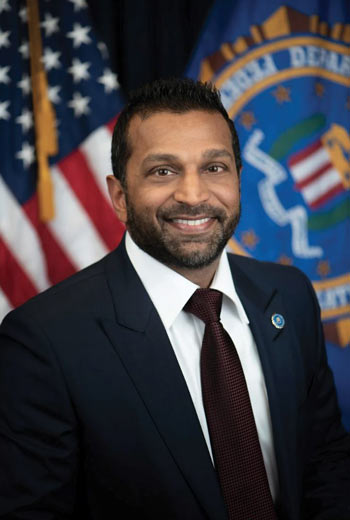 Immigration Subcommittee, pressed Federal Bureau of Investigation (FBI) Director Kash Patel on the Trump Administration’s efforts to involve federal law enforcement in elections and secured a commitment that the FBI will not seize ballots, voting machines, or other election materials in connection with the 2026 midterm elections before they have concluded.
During the oversight hearing, Padilla raised concerns about the FBI’s unjustified raids on Fulton County, Georgia earlier this year to seize ballots from the 2020 presidential election that Donald Trump lost. He also cited the subsequent “copycat move” by a county sheriff to seize 650,000 ballots in Riverside County, California following the Prop 54 congressional redistricting referendum in 2025.
Additionally, Padilla highlighted Patel’s failure to provide any answers to written questions from last year’s congressional oversight hearing — severely undermining Patel’s claims of transparency and accountability. Padilla also raised concerns about Artificial Intelligence (AI) cyberattacks, and the FBI’s role in investigating the violent use of force by ICE and CBP officers and agents.
PADILLA PRESSES PATEL ON FBI ELECTION INVOLVEMENT
First, Padilla asked Patel to reaffirm the Department of Justice’s longstanding election noninterference policy to not take overt criminal investigative measures involving any alleged ballot fraud until an election has concluded, results have been certified, and recounts and election contests have been resolved. Padilla also asked if the FBI Director could make the same commitment that the Chairman of the Joint Chiefs of Staff, General Dan Caine, recently made that he has “no plans to use such personnel to seize ballots, voting machines, or other election related material.”
“My question to you is, can you make the same commitment?” Padilla asked Patel.
“Yes,” Patel responded.
PADILLA DEMANDS ACCOUNTABILITY
Padilla then pressed Patel on his failure to submit responses to written questions to the record from last year’s congressional oversight hearing.
PADILLA: “A year ago, this committee convened to exercise its oversight responsibility, like we are doing here today, to get answers to critical questions about the FBI’s activities under your leadership. I know other colleagues have reminded you of some of the pledges and statements you made that day: that you’re committed to full transparency, to oversight and accountability, to restore the public’s trust in the FBI. You made that promise again here today… it has been almost a year, and we still have not gotten responses, no answers, to our questions for the record that were submitted last year.”
[…]
“When can we expect answers to this year’s questions? By the end of October?”
PATEL: As fast as we can.
PADILLA: If last year is any indicator, that’s clearly not fast enough and not consistent with your pledge of transparency and accountability and responsiveness.
PATEL: If I may, the end of October is pretty reasonable. We can abide by that.
PADILLA PROBES PATEL ON AI CYBERSECURITY
Padilla then pressed Patel on the FBI’s response to reports of cyberattacks involving rogue AI agents, such as the recent Hugging Face hack. Padilla inquired who would be held accountable for attacks by autonomous agents and what safeguards the FBI has instituted to prevent rogue AI agent attacks within the FBI’s system.
PADILLA: First, the prospect of rogue AI agents is obviously top of mind because of the autonomous agents hacking into Hugging Face. I imagine it is also top of mind for you, given that Hugging Face apparently reported the cyberattack to the FBI. Is that correct?
PATEL: Partially. The rest of that, we can talk about in a classified setting.
[…]
PADILLA: As a follow-up, a specific policy and technical question – because it seems like we are in a new frontier here. What protocols or procedures are different, if any, given that these are autonomous, nonhuman actors that have been accused of committing these crimes?
PATEL: The difference is someone created them. For us, the approach is the same. We look at it as an electronic entity. Someone made them for this specific deployment, and just like any other program we have, if it’s for a good, lawful use, we’re fine. If it’s for an ill-intended, unlawful use, we go after the entity or the people that created that system if they intentionally deployed it to cause that result.
PADILLA: So to be clear, for the people watching at home, who was it then that you are investigating or will hold accountable if the information you come across warrants indictments, charges, etc.?
PATEL: Companies, personnel. Whoever is responsible.
[…]
PADILLA: Out of curiosity – AI is being utilized in the course of the FBI’s work, investigations and otherwise. What safeguards have you put into place to monitor, prevent, or respond to AI agents going rogue within the FBI systems?
PATEL: There is a ton. We don’t just bring in AI and let it run loose. We take it in as a test use, case-by-case basis, and then test it on a specific set of data, either at a headquarters component or one specific field office, then we get feedback on whether or not that AI capabilities and large language models abided by our policy and DOJ mandates and the law.
PADILLA PRESSES PATEL ON FBI INVESTIGATIONS OF IMMIGRATION ENFORCEMENT SHOOTINGS
Padilla further confronted Patel about reports that the FBI would no longer investigate shootings involving ICE and CBP officers and agents, and specifically asked about investigations into the killings of Joan Sebastian Guerrero and Lorenzo Salgado Araujo.
While Patel stated that the FBI participates in investigations of excessive use of force in immigration enforcement actions, he admitted they do not always take the lead and did not provide any updates on the status of such investigations, stating he would have to consult with the Department of Homeland Security (DHS). Padilla called for more independence in these investigations to ensure transparency.
PADILLA: Reports indicate, in July, field offices received guidance to stop investigating confrontations with immigration enforcement officials or agents involved with immigration enforcement. Yes or no, did you or your leadership team instruct field offices to stop investigating excessive use of force by ICE or CBP?
PATEL: No.
PADILLA: Can you reiterate for me, for the community, for the public, what is the current guidance to field offices as it pertains to these types of investigations?
PATEL: Every single investigation is different, depending on the location, on who the officer is. We have to bring in the lead home agency if it’s one of theirs, one of ours.
PADILLA: But every incident is investigated?
PATEL: To my knowledge, every incident is investigated through the interagency process.
PADILLA: With FBI participation in those investigations?
PATEL: Yes, and we’re always called in. We’re always asked to participate because we have some technical capabilities that other agencies don’t.
[…]
PADILLA: You should be the lead on these investigations. The independence of these investigations is critical for true accountability.
[…]
PADILLA: Can you comment on the status of investigations on the shootings of Joan Sebastian Guerrero, or Lorenzo Salgado Araujo, or any of the 23 shootings involving ICE or CBP?
PATEL: I would have to get back to you on those because again I’d have to go talk to my DHS partners.
Video of Padilla’s full questioning is available here.
Source: Senator Alex Padilla