
Lifeline for Local Entrepreneurs Will Receive Withheld Funds After Legal Challenge Launched by Coalition of Economic Development Groups
September 27, 2026 - San Francisco – The Treasury Department announced in federal court on Thursday, September 24, that it is 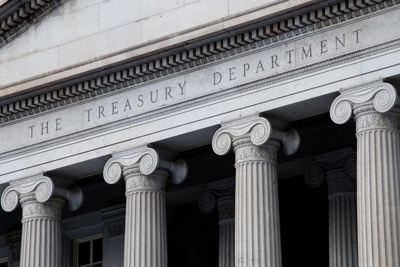 releasing approximately $289 million in congressionally appropriated funds it had withheld from Community Development Financial Institutions (CDFIs), which are a critical source of capital for small businesses and entrepreneurs in underserved areas across the country. The announcement came in response to a legal challenge brought by a coalition of economic development groups that sued to stop Treasury and the Office of Management and Budget (OMB) from unlawfully withholding the funds.
The legal challenge was filed in August by CAMEO Network and the Los Angeles-based Inclusive Action for the City, and asked a court to act to prevent the irreversible expiration of hundreds of millions of dollars in Congressionally appropriated funds for CDFIs. The funds, which were set to expire if not obligated by the end of September, support CDFIs in making loans to small businesses, which face barriers in accessing capital from traditional banks, on accessible terms borrowers can actually repay, in places other programs do not reach. Democracy Forward represents the plaintiffs in this case.
The CDFI Fund’s Director had said in a sworn declaration filed in the case earlier this week that he “anticipates that nearly the full amount of Fiscal Year 2025 CDFI program funding” – approximately $288,992,757 of $289,000,000 outstanding – “will be obligated by close of business on September 23, 2026,” or one day before the Northern District of California hearing on the coalition’s motion for emergency relief. At yesterday’s hearing, the administration’s lawyer told the court that the funding had been obligated on September 23.
While confirmation by the government in court that the funds will be released marks a meaningful victory for the coalition that brought the lawsuit, the coalition will remain vigilant as the funds are distributed to ensure they are lawfully awarded and meaningfully fulfill their intended purpose of supporting CDFIs. The coalition is working to obtain more information from the government, including seeking a sworn statement by a Treasury official confirming the obligation of the funds consistent with the law. The federal court yesterday instructed the parties to meet and confer over the contents of a sworn statement Treasury could submit to assure the plaintiff coalition and the judge that the government is complying with the law, and set a second hearing date for September 29 to resolve any outstanding issues.
“From the beginning, our goal with this lawsuit was to prompt a quick distribution of funds so that CDFIs could get back to work in their communities,” said Carolina Martinez, CEO of CAMEO Network. “With the government’s confirmation yesterday, funding set to expire at the end of the month will now reach the small businesses and the communities that it was intended for – to create jobs, strengthen local economies, and build vibrant neighborhoods.”
“We’re proud to stand with America’s small businesses to protect the CDFI Fund – a critical lifeline for entrepreneurship and community investment across the country,” said Doug Smith, Vice President of Policy and Legal Strategy at Inclusive Action for the City. “Following our lawsuit, the federal government has committed to meet its legal obligation to distribute almost $300 million in congressionally approved funding. When CDFIs are equipped to invest in our communities, our economy grows and our neighborhoods thrive.”
In the mid-1990s, a bipartisan Congress established the Treasury Department’s CDFI Fund, creating a source of federal support for community lenders that serve people, businesses, and communities that traditional lenders often fail to serve. Over three decades, bipartisan Congresses have consistently appropriated money for the CDFI Fund, which has financed more than $270 billion in small business loans, housing, community clinics, and other community investments between 2005-2023. The funding has built the capacity of more than 1,400 certified CDFIs operating in all 50 states, the District of Columbia, Guam, and Puerto Rico. More than that, CDFIs are critical to broader community investment, including expanding affordable housing, healthcare, and childcare that serves families and communities.
Funding for CDFIs came under threat in May 2025, when the president’s budget asked Congress to eliminate the CDFI Fund’s discretionary award programs outright. Congress rejected the proposed cuts and appropriated $324 million for fiscal year 2026, the same amount that it appropriated in fiscal year 2025. Congress further barred the use of any appropriated funds to “increase, eliminate, or reduce funding for a program, project, or activity as proposed in the president’s budget request” unless Congress itself enacts that change.
Still, the Trump-Vance administration persisted in unlawful efforts and ignored Congress’ clear directives by withholding all of the money Congress appropriated for CDFI award programs, which is supposed to reach CDFIs and the communities they serve. At the time the case was filed, CDFI Fund award announcements had not been made, threatening hundreds of millions of dollars in investment for CDFIs nationwide as the fiscal year 2025 appropriation expires on September 30, 2026. Days before a hearing on plaintiffs’ preliminary injunction motion seeking the release of the 2025 funds, Treasury announced it intended to release the funds. The government represented that the funds had been awarded at yesterday’s preliminary injunction hearing. This development is significant, but it does not resolve the case, which includes claims concerning over $1 billion more in CDFI funds from other fiscal years, including fiscal year 2026, that Congress appropriated, but the administration continues to block.
“We know that CDFIs offer a crucial lifeline to small businesses that all too often get overlooked – which is why bipartisan majorities in Congress have supported them,” said Skye Perryman, President and CEO of Democracy Forward. “We are pleased to see that in the wake of litigation, the Trump-Vance administration has been forced to announce the release of this critical funding – but it should not have taken a lawsuit to compel this action. We are honored to represent our clients in their challenge to get the administration to release crucial CDFI funding. We remain vigilant to ensure the administration has met its obligations, considering that just weeks ago, the administration claimed it was ‘unreasonable’ and ‘impossible’ for it to ‘lawfully’ distribute these funds by their September 30 expiration deadline. This is proof again that litigation matters, and we will continue to use every legal tool available to hold this administration to account. We will also watch closely to ensure the Treasury Department administers these awards lawfully.”
The case is Inclusive Action for the City and CAMEO Network v. U.S. Department of the Treasury et al and the Democracy Forward’s legal team involved in this case includes Andrea Matthews, Anna Deffebach, Hanna Hickman, Steven Bressler, and Elena Goldstein.
Read the original complaint here.
Democracy Forward Foundation is a national legal organization that advances democracy and social progress through litigation, policy, public education, and regulatory engagement. For more information, please visit www.democracyforward.org.
CAMEO Network (registered as California Association for Micro Enterprise Opportunity) is a national network of business service providers made up of 400 organizations, agencies, and individuals dedicated to furthering Micro-Business development with small and micro-business financing such as loans and credit, technical assistance and business management training. Annually, CAMEO members serve about 200,000 very small businesses with training, business and credit assistance and loans. These firms – largely start-ups with less than six employees – support or create 300,000 new jobs and generate a total of $15 billion in economic activity.
Inclusive Action is a nonprofit organization and a community development financial institution (CDFI) based in Los Angeles. Our mission is to champion working people, invest in entrepreneurs, and change systems to build an economy that works for all of us.
Source: Democracy Forward