
November 25, 2026 - WASHINGTON — On Tuesday, the U.S. Environmental Protection Agency released the following:
Today, U.S. Environmental Protection Agency (EPA) Associate Administrator for National Security and Operations Coordination Tom Croci joined U.S. Army Acting Secretary Adam Telle, U.S. Federal Emergency Management Agency (FEMA) Administrator Cameron Hamilton, U.S. Bureau of Alcohol, Tobacco, Firearm & Explosives (ATF) Director Robert Cekada, U.S. Department of Health and Human Services (HHS) Principal Deputy Assistant Secretary for Preparedness and Response Sean Kaufman, and U.S. Department of Agriculture Under Secretary for Farm Production and Conservation Richard Fordyce, and others to discuss the U.S. Army’s plans to conduct a controlled, in-place detonation of degraded crystallized lead azide at the Iowa Army Ammunition Plant in Middletown, Iowa, to take place on Wednesday, November 25, 2026, at approximately 9:00 a.m. CST.
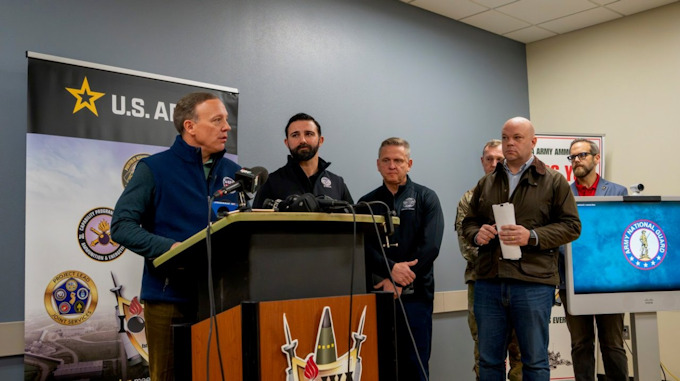
"As a supporting agency, EPA has mobilized a significant on-the-ground response, working with Army, FEMA, HHS, and our federal partners to ensure the controlled detonation is conducted in the safest manner possible. EPA’s ground response is continuing to expand, with additional teams of EPA and contract personnel being deployed, along with our emergency response resources that will include three mobile labs and one air toxics lab that are using gold standard science," said EPA Associate Administrator for National Security and Operations Coordination Tom Croci. "EPA has been on the ground conducting independent air, water, and soil sampling and will continue until the mission is complete. We are putting the full force of the agency behind this effort to ensure we are doing everything possible to protect human health and the environment."
A controlled detonation is the most protective option in preventing potential exposure to lead, especially as it relates to increased health risks from lead for infants, young children and pregnant women. A controlled detonation during optimal weather conditions and incorporating robust mitigation measures, compared to an uncontrolled explosion, significantly reduces the potential reach and concentration of lead dust landing on surfaces, such as homes and windows. The Army continues to significantly reduce risk through the extensive mitigation efforts they have performed at the site and will continue to improve upon until the moment of detonation. The federal agencies on the ground in Middletown are actively working to update and engage state and local officials, as well as the broader community, with the highest priority being the protection of the health and safety of all families, residents, and communities in Iowa, Missouri, and Illinois. To date, EPA has deployed over 100 agency personnel and contractors and has conducted over 1,001 combined air, land, and water samples pre-detonation within the surrounding communities and regions of Middletown, Iowa. EPA will continue sampling throughout the area during and after the controlled detonation. We will be using these results in coordination with our partners at the Centers for Disease Control and Prevention to ensure that any appropriate action can be taken to remediate lead. The sampling data will be reported in a timely and effective manner.
EPA also understands that getting through the detonation safely is the first step. The federal government is working together to ensure that the controlled detonation is conducted in the most preventative way possible as it relates to human health and the environment. All agencies involved are prepared to take the most comprehensive measures available to ensure any risk to the communities, families, and residents are mitigated, and any disruptions are minimized.
Source: EPA