


IJ is a public interest law firm. We represent clients free of charge in cutting-edge litigation defending vital constitutional rights. You can join us by supporting our work here: ij.org/support
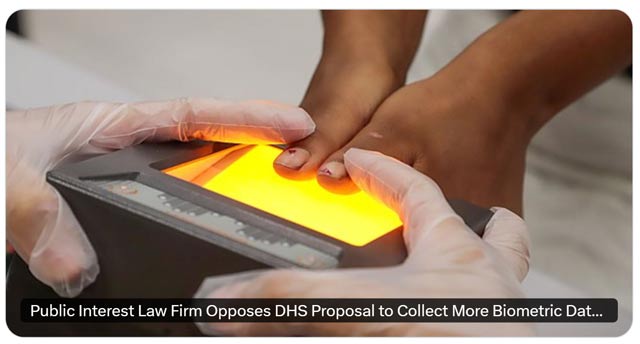
January 6, 2026 - ARLINGTON, Va.—By Dan King - On Friday, the Institute for Justice (IJ) submitted a comment opposing a proposed rule that would grant the Department of Homeland Security (DHS) massive new powers to collect biometric data on citizens and noncitizens alike.
“While most people were enjoying their holidays, DHS was busy trying to sneak through a new, Orwellian form of mass surveillance,” said IJ Senior Attorney Robert Frommer, one of the heads of IJ’s Project on the Fourth Amendment. “Collecting the DNA profiles of millions of innocent Americans and storing them in a massive government database is exactly the type of thing the Fourth Amendment is meant to protect against.”
The proposed rule would grant DHS vast authority to collect and store DNA from U.S. citizens who are involved with applying for immigration benefits like family visas, Green Cards and work permits. This includes applicants, petitioners, beneficiaries and other individuals. Making matters worse, the rule would allow DHS to store this data indefinitely and share it with other government agencies for any number of purposes without a warrant.
“This data collection would not be limited to just immigrants, it would also impact millions of American citizens,” said IJ Attorney Tahmineh Dehbozorgi. “DHS is claiming this DNA collection is meant to serve one narrow purpose, but realistically, it is creating a vast genetic dragnet that endangers the Fourth Amendment rights of everyone, all without Congress’ approval.”
In 2020, DHS proposed a similar rule but withdrew the proposal after receiving thousands of comments explaining that the program violated the privacy rights and civil liberties of U.S. citizens. Since then, the Supreme Court has made it even clearer that agencies like DHS cannot simply give themselves the powers they want; instead, they are only granted the powers statutorily authorized by Congress.
IJ’s comment shows various ways this proposed rule would violate the Fourth Amendment and explains that DHS Secretary Kristi Noem does not have the legal authority to create this DNA dragnet in the first place.
Through its Project on the Fourth Amendment, IJ is fighting to protect people from various forms of unconstitutional searches and seizures. In New Jersey, IJ is challenging the state’s policy of collecting blood from every newborn and holding onto the blood samples without parental consent. IJ is leading a nationwide campaign against the warrantless use of automated license plate reader cameras, which started with a first-of-its-kind federal lawsuit in Norfolk, Virginia. And IJ is fighting against warrantless searches of homes and private property.
Source: Institute for Justice
