


February 19, 2026 - SACRAMENTO, CA – On Wednesday, Assemblymember Marc Berman (D-Menlo Park) introduced 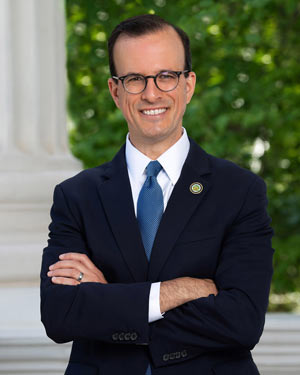 Assembly Bill 2121, the Defending Student Equity and Access Act, to protect critical programs for vulnerable community college students under attack by the federal administration.
In September 2025, the Trump administration terminated $350 million in Minority Serving Institution (MSI) grants, leaving colleges without funding for these vital student support programs. The administration's proposed fiscal year 2026 budget seeks to eliminate MSI and TRIO programs entirely, threatening long-standing initiatives that provide counseling, tutoring, mentoring, and transfer guidance to more than 1.6 million California community college students. These cuts threaten services that help California's most vulnerable students – low-income, first-generation, and students of color – complete their degrees.
AB 2121, sponsored by West Valley-Mission Community College District, responds to the administration's systematic dismantling of federal student success programs by removing barriers that prevent community colleges from backfilling this loss in federal funding.
"The Trump administration's assault on higher education is an attack on historically marginalized students who rely on these critical programs to stay in school and succeed," said Assemblymember Berman. "When President Trump pulls the rug out from under our most vulnerable students, California must fight back, holding firm to our values of equity and access to higher education. AB 2121 empowers our community colleges to save these programs and continue supporting their students, who deserve better than to become collateral damage in this administration’s cruel agenda.”
MSI programs provide support at Hispanic Serving Institutions (HSIs), Asian American and Native Hawaiian/Pacific Islander-Serving institutions (AANHPIs), and other colleges serving high concentrations of underrepresented students. Research shows these programs significantly increase college completion rates for students who would otherwise be least likely to persist. More than 90 percent of California's community colleges are designated HSIs, with the state receiving roughly 70 percent of all federal HSI funding, while 50 community colleges participate in the AANHPI Student Achievement Program.
TRIO programs serve low-income and first-generation students nationwide through tutoring, mentoring, college application assistance, and financial aid guidance. In California alone, more than 440 TRIO projects serve students with over $150 million in annual federal funding.
"Community colleges exist to serve students who have been historically excluded from opportunity," said Chancellor Bradley J. Davis of the West Valley-Mission Community College District. "Federal efforts to dismantle equity-driven programs strike at the heart of that mission. This bill ensures that California law does not compound that harm by preventing colleges from sustaining critical support for their students."
Under current law, federal grant dollars are excluded from California's Fifty Percent Law, which requires community colleges to spend at least fifty percent of their expenditures on classroom instructors. However, if community colleges want to backfill this federal funding the Fifty Percent Law would apply to those replacement dollars, impacting compliance and penalizing community colleges for stepping up to help their students.
AB 2121 enables community colleges to backfill the federal cuts to MSIs and TRIO programs. By temporarily excluding those backfill dollars from the Fifty Percent Law, community colleges can preserve these federally-defunded student support programs.
"I'm first-generation, and honestly, without AANHPI or TRIO, I wouldn't be here," said Miya Torres, a West Valley College student. "The advisors and tutors who checked in when things got hard are the reason I'm still enrolled. That's the reason a lot of us are. If those programs disappear, it's not just a budget line. It's real students who don't make it through."
AB 2121 includes transparency requirements and annual district certifications, with a sunset after five years or upon restoration of federal funding, whichever occurs first. The bill maintains safeguards for faculty, such as not reducing spending on classroom instructors. AB 2121 does not request new state funding or create any state backfill requirement and would take effect immediately.
"Coming from a low-income family, college felt like it wasn't made for people like me," said Jissel Alvarez, Mission College student and Vice President of the Associated Student Government. "TRIO gave me tutors, advisors, people who actually understood where I was coming from. Losing that support doesn't just hurt grades, it's the difference between finishing and dropping out."
Source: Assemblymember Marc Berman
