


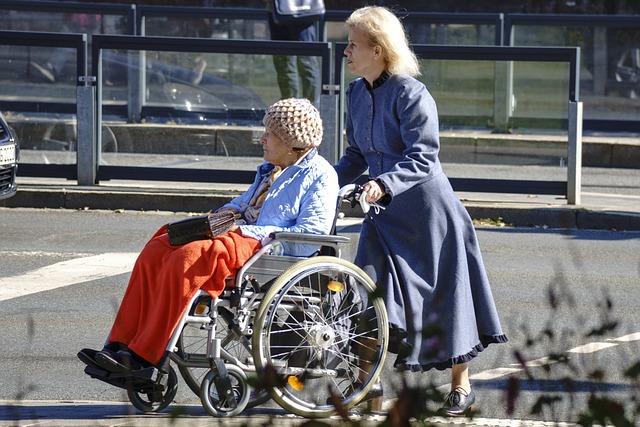
Caregiver Image by Manuel Alvarez from Pixabay
March 26, 2026 - By Avi Patel - When disasters strike, nursing homes face uniquely high stakes. Residents often depend on power, medications, mobility assistance, and continuous care—all of which can be disrupted by hurricanes, wildfires, or other emergencies. Federal regulations require facilities to meet detailed emergency preparedness standards, and families often assume that passing inspections means residents will be protected. But does compliance translate into safety?
Recent research by Natalia Festa, MD, MHS, assistant professor of medicine (geriatrics) at Yale School of Medicine, suggests the answer may be more complex than many expect.
In an interview, Festa discusses nursing home regulation and her findings, which were published in Health Affairs Scholar and BMJ Public Health.
You trained as an internist and geriatrician before turning your focus to nursing home regulation. What drew you from bedside medicine into studying the systems that shape care?
During the COVID-19 pandemic, I saw how deeply regulatory structures influenced nursing home care. There were extensive infection control standards in place, yet outcomes for many nursing home residents residing in long-term care nursing homes were often poor. That prompted me to ask whether compliance with federal regulations translates into meaningful protection for residents. As a geriatrician, my clinical focus is on the well-being of older adults, and that includes understanding whether regulatory frameworks designed to protect them are functioning as intended.
When you began examining emergency preparedness standards, you expected at least some measures of compliance to predict better post-disaster outcomes. Instead, you found no association. How did you interpret that finding?
We initially set out to identify which regulations mattered most so they could be emphasized in oversight. When we did not find an association between compliance and post-disaster outcomes, it was surprising. It suggested that the way we currently measure preparedness may not be capturing the elements that truly influence resident outcomes. That finding shifted our focus to whether our measurement framework itself needs refinement.
Your work suggests the issue may not be regulation itself, but how preparedness is measured. What does a binary “compliant or not” framework fail to capture?
Many preparedness standards are evaluated dichotomously—a facility either meets a requirement or it does not. That approach may not distinguish between a facility that narrowly satisfies a minimum threshold and one that has comprehensive, deeply integrated emergency planning. Disaster response is dynamic and depends on staffing mobilization, coordination, and real-time decision making. Static compliance indicators may miss those adaptive elements that ultimately shape resident outcomes.
In contrast to compliance scores, you found that the timeliness of inspections may have a protective effect. Why might the act of inspection itself matter?
Facilities that were up to date on inspections appeared to have a lower risk of adverse post-disaster outcomes. One interpretation is that inspections provide a formal mechanism for accountability and encourage facilities to maintain preparedness beyond minimum standards. Inspections may also provide informal guidance from surveyors that helps staff translate administrative requirements into practical procedures. In that sense, the inspection process itself—rather than the compliance score—may influence preparedness in ways not fully captured by current data.
For individuals evaluating nursing home options in disaster-prone areas, is there anything specific they should pay attention to?
While replication across additional events and geographies is needed, the consistency of our findings suggests that preparedness may be more complex than current compliance metrics can capture. Families may consider asking facilities about how they operationalize their emergency plans—for example, how they mobilize staff during a storm, coordinate with local emergency agencies, or maintain power-dependent equipment. These real-time processes may be just as important as formal inspection results.
As extreme weather events become more frequent, how should federal oversight evolve to better reflect the realities nursing homes face?
Our research suggests opportunities to strengthen oversight by incorporating greater granularity and more dynamic measures of preparedness. Moving beyond binary standards and better capturing staffing flexibility, coordination, and adaptive response may improve alignment between regulation and real-world outcomes. Replicating this work across different disasters and geographies will also be important to ensure that future regulatory refinements are evidence-based and responsive to emerging risks.
Geriatrics, one of 10 sections in the Yale Department of Internal Medicine, strives to improve the health of older adults by providing exceptional patient care, training future leaders and innovators in aging, and engaging in cutting-edge research. To learn more, visit Geriatrics.
The research reported in this news article was supported by the National Institutes of Health (awards R03AG088893 and P30AG021342) and Yale University. The content is solely the responsibility of the authors and does not necessarily represent the official views of the National Institutes of Health. Additional support was provided by the Health Resources and Services Administration, the Patrick and Catherine Weldon Donaghue Medical Research Foundation, and the John A. Hartford Foundation.
Source: Yale School of Medicine
