


Sen. Schiff: “For the sake of all 13 families that have already lost someone to this senseless, directionless war. For the sake of future generations who may be sent into battle without the approval of the Congress or the American people, by a president grown too fond of war. This has to be the moment we stand up. This has to be the moment we say – enough.”
May 1, 2026 - Washington, D.C. – On Thursday, a majority of Senate Republicans voted to block a War Powers 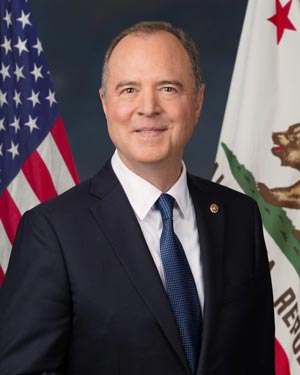 Resolution aimed at ending President Trump’s illegal war in Iran offered by U.S. Senator Adam Schiff’s (D-Calif.), Senate Democratic Leader Chuck Schumer (D-N.Y.), and other Senate Democrats. The Senators emphasized that, after 60 days of war, it is long past time for Republicans to hold Donald Trump accountable.
Earlier today, Schiff laid out the importance of the War Powers Act’s 60-day mark on the Senate floor. Under the War Powers Resolution of 1973, the president must remove the Armed Forces from the conflict after 60 days if Congress does not authorize the use of force.
The procedural vote would have brought Senator Schiff’s resolution up for Senate consideration on the 60-day mark after the administration’s notification to Congress, coinciding with the War Powers Act’s statutory clock running out.
Senator Schiff’s resolution is co-led by Leader Schumer and U.S. Senators Tim Kaine (D-Va.), Cory Booker (D-N.J.), Chris Murphy (D-Conn.), Tammy Baldwin (D-Wis.), Tammy Duckworth (D-Ill.), Andy Kim (D-N.J.), Jeff Merkley (D-Ore.), Chris Van Hollen (D-Md.), and Kirsten Gillibrand (D-N.Y.), many of whom have also championed separate War Powers Resolutions to halt the unauthorized use of U.S. military forces in Iran.
“Even if you accept the premise that Trump’s war in Iran was responding to an imminent threat, which I certainly don’t, under the War Powers Act he has no authority to continue this war past 60 days. Today, I forced a vote to assert the War Powers Act, and end the war. While we had some bipartisan support for my resolution, it was not enough to pass. And so the war will drag on in violation of the law and constitution,” said Senator Schiff.
“For 60 days, prices on everything from gas to groceries have soared. For 60 days, Trump has endangered the lives of our brave servicemembers. And for 60 days, Republicans have greenlit it all. And even now – on the day that Republicans admit is a turning point in Congressional authority over military hostilities – Senate Republicans refuse to stand up to Trump and his illegal war. Senate Democrats will never stop fighting for the safety and prosperity of our country, and Republicans must join us,” said Leader Schumer.
“Some of my Republican colleagues have said that Congress should authorize military action after 60 days, yet they voted today against our Iran War Powers Resolution. My colleagues on the other side of the aisle are not only abdicating their most solemn constitutional responsibility to decide whether to send our nation’s sons and daughters into war, but they are also backtracking on what they’ve told their own constituents who have zero interest in a costly and unnecessary war with no end in sight. We must end this war as soon as possible so we can turn our focus to domestic priorities like health care, housing, and education,” said Senator Kaine.
“President Trump’s war of choice in Iran has taken the lives of 13 servicemembers, cost American taxpayers upwards of $25 billion, and is jacking up the cost of energy, fuel, and fertilizer for Wisconsin families and farmers. The American people do not support this war that has accomplished very little to keep us safe. It’s our duty to stand up for our constituents, rein in this President, and stop this illegal war that the American people did not choose,” said Senator Baldwin.
“As we head into the summer and the price of everything for American consumers gets higher and higher – their summer travel, their plane tickets, their clothing, their groceries – there is only one person to blame: Donald Trump. And there is only one party to blame: the Republican Party, which could choose to join us and vote for one of these resolutions to end the war, to allow us to get back to a point where prices are coming down instead of spiraling upward. This is a choice that our Senate Republican colleagues make every week to vote for continuing this war and for continuing this disastrous price escalation on ordinary Americans,” said Senator Murphy.
“Each week, Democrats have come to the floor to demand hearings, transparency, and basic accountability. We have continued to force debate and votes in an effort to end this costly war. And each week, my Republican colleagues have refused to use their votes to provide checks and balances on this Administration in order to put the American people, who did not ask for this war, first. This reckless, unauthorized, and unconstitutional war places service members and diplomats abroad at continued risk, threatens our national security, and drives up costs for families already struggling to make ends meet across our nation. While American families continue to pay the price, Secretary Hegseth remains unable or refuses to communicate any coherent plan, timeline, or strategy. Instead, despite already spending nearly $2 billion a day on this war, he is requesting even more funding while leaving Congress in the dark. So here we are again, for a sixth time demanding that this body remember its Constitutional duties. The Constitution grants Congress—and Congress alone—the authority to declare war and authorize the use of military force, and it has done neither. Democrats will continue to fight to end this war and ensure Congress fulfills its responsibility,” said Senator Booker.
“While Trump’s war of choice against Iran has been illegal since day one, Republicans have cowered behind their fake 60-day deadline to avoid doing their jobs—and it’s infuriating that, even as their self-imposed deadline approaches, today they once again abandoned their oaths and Constitutional responsibility. For the sixth time now, my Republican colleagues instead chose to continue enabling this unhinged President as his unjustified war continues to cost taxpayers and our servicemembers. Trump has already burned a minimum of $25 billion in taxpayer money – likely far more — on a war the American people don’t want and that sent gas and grocery prices soaring, left 14 servicemembers dead and hundreds more wounded. Our nation is not better off, safer or more secure, but Republicans continue proving they could not care less,” said Senator Duckworth.
This is the sixth time Democrats have forced a vote to end Trump’s illegal war, and Republicans have instead voted to rubberstamp it:
- On March 4th, Republicans blocked Senator Kaine’s (D-VA) resolution 47-53.
- On March 18th, Republicans blocked Senator Booker’s (D-NJ) resolution 47-53.
- On March 24th, Republicans blocked Senator Murphy’s (D-CT) resolution 47-53.
- On April 15th, Republicans blocked Senator Duckworth’s (D-IL) resolution 47-52.
- On April 22nd, Republicans blocked Senator Baldwin’s (D-WI) resolution 46-51.
The full text of the resolution is available here.
Read the full transcript of his remarks as delivered below:
For the last eight weeks, I have taken to the Senate floor to oppose the Iran War.
I have pointed out the lack of an imminent threat from Iran, and the shifting justifications for the war.
I have enumerated the many costs of the war, in blood and in treasure, in higher gas prices and cost of groceries, and I have lamented the loss of thirteen servicemembers, including a Californian, and the injury of scores of others.
Today, I rise to sound the alarm about another risk of this war, and that is, that the administration is poised to violate the War Powers Act, and that if we permit such a flagrant violation of the law, we, the Senate and the Congress, will have surrendered the war power completely to the executive.
This would be enormously dangerous and wrongheaded. I believe it is also in direct contravention of the constitution and our duty to uphold it.
At midnight tonight, it will be the 60th day since Donald Trump notified Congress under the War Powers Act that we were at war with Iran. 60 days.
It is also a moment that some of my Republican colleagues have pointed to as a turning point in their consideration of the legal and constitutional basis for the Iran war.
That is because under the War Powers Act of 1973, a president is legally mandated to remove military forces from a conflict if Congress has not voted to authorize it within those 60 days.
As we have all acknowledged, the president can order military action in response to an armed attack, or the imminent threat of an attack, if those dangers require immediate action.
But that power and responsibility is not unlimited. After 60 days, he must seek an authorization from congress to continue the war, or failing to receive it, he must order the withdrawal of our forces.
Now, some of my colleagues across the aisle have argued that the president properly began this war because they believe we faced some form of an immediate threat to our forces or our allies.
But they have also affirmed that the president’s authority to use military force expires after the 60 days set out in the War Powers Act.
Now, I strongly disagree with the argument that we faced an attack or an imminent threat of attack from Iran justifying this war, but I respect the fact that some of my Republican colleagues have acknowledged that authority — if it exists — lapses tomorrow night.
This military operation has been carried out by the commander in chief for the past 60 days.
We have multiple carrier strike groups, tens of thousands of service members–pilots and sailors and soldiers and Marines–all serving halfway around the world and now for 60 days.
In addition to the thirteen servicemembers who have lost their lives, more than two hundred others have been seriously or injured and some seriously.
And the letter of the law is clear. This is what the act says.
“Within 60 calendar days after a report” – and that is a report on the beginning of hostilities, like the one we received from the president on March 2 – within 60 calendar days “the President shall terminate any use of the United States Armed Forces with respect to which such a report was submitted”. Shall terminate.
That is: “unless the Congress has declared war or has enacted a specific authorization for such use of United States Armed Forces.”
Now, this is important, the law does not turn on the introduction of an authorization to use force, or committee consideration of such an authorization, or even a Senate floor vote on authorization.
No, the law requires the enactment of a war authorization, and failing that, the president is required to remove U.S. forces.
And this is the case unless the Congress changes the War Powers Act itself (which we have not done) or cannot meet as a result of an attack (which is demonstrably not the case, because, well, we are all here).
Those are the only two carveouts. There are no other exceptions.
If the president is still using the military for the same purpose as he was 60 days earlier, and there has been no authorization of military force enacted or war declaration, the president must terminate this use of force until Congress says otherwise.
Now some might argue that because we are not currently bombing Iran, because there is a tentative ceasefire in place, that somehow the War Powers Act no longer applies.
That somehow the War Powers clock stops ticking. But this is simply not true. The U.S. Navy is still being used to interdict Iranian ships or ships embarking from Iranian ports, we are still using our Navy to blockade Iran, our service members are still at risk, and there is no provision in the War Powers Act to suspend the clock when military force is used in one respect but not another.
For the law says: “the President shall terminate any use of United States Armed Forces.” There is no exception made for the Navy or the use of Naval forces.
Now, the law allows for a 30-day period for a safe withdrawal if the administration seeks it, but the president has not requested one. And it is important to note that the purpose for an extension is explicit in the law:
It exists “if the President determines and certifies to the Congress in writing that unavoidable military necessity respecting the safety of United States Armed Forces requires the continued use of such armed forces in the course of bringing about a prompt removal of such forces.”
The president has made no such certification.
And so – I say to my colleagues – this is the moment you have pointed to and waited for. This is the moment when Congress must assert itself. This is the moment when we must recognize that the Founders gave Congress alone the power to authorize war.
The moment of reflection and action that you have identified, and I respect you for doing so, is here. And we must take action.
We should all bear in mind that today’s vote is simply to bring a resolution to the Floor – to discharge my resolution, S.J.Res. 184, from the Senate Foreign Relations Committee — so that it can be debated by the Senate.
That will happen well after the 60-day clock has expired.
Colleagues, we must not move the goalposts again. If we do, we surrender all authority to authorize war to the president. And he already has enough power. What we have remaining is already so greatly diminished. Already a poor reflection, a mere shadow of the power granted to us by the constitution and our founders.
The War Powers Act was the product of a bipartisan, bicameral agreement, which took years to negotiate in the aftermath of the Vietnam War — another deeply unpopular war that stretched far longer than the American people wanted.
Consider the words of one of this law’s authors, Senator Jacob Javits, a Republican Senator from New York.
Words he spoke on the Senate floor while Senators overrode a Presidential veto of this law, with a full 75 votes in the Senate, and nearly 300 in the House.
Senator Javits said:
“No one is impairing the president’s authority to carry on the foreign policy of this country.
“Let us not confuse this with foreign policy. Foreign policy does not mean war and war does not mean foreign policy, unless there is a breakdown or failure of foreign policy.”
“Congress is determined to recapture for ourselves, the representatives of the people at the State level in the Senate and as the House did on local level, the awesome power to make war.”
“When we judge, by this measure,” he said, “that an incident would become a war, then we, and we alone, have the right to decide that it shall go on into war or that it shall stop.
“For the Constitution lays upon the Congress, unmistakably, the responsibility of deciding whether or not the state of our Nation should be changed from peace to war.”
Senator Javits understood the criticism that would be leveled against the Act and those who supported it by President Nixon and his allies. But he also understood that the Constitution was clear.
And he helped draft a law that upheld, reinforced, and strengthened the separation of power between a Commander in Chief, and a Congress empowered to authorize his use of that command for the purpose of making war.
Our war power is given, clearly, by the Constitution. But it is a muscle. If we do not exercise it, it will not hold our weight. And Congress for years has allowed that muscle to atrophy.
50 years ago, Republicans and Democrats alike tried to reinvigorate our war power with an eye to restoring the authority that Congress possesses, but which the Vietnam War had eroded. We must not ignore that law now.
For the sake of all 13 families that have already lost someone to this senseless, directionless war. For the sake of future generations who may be sent into battle without the approval of Congress or the American people, by a president grown too fond of war.
This has to be the moment we stand up.
This has to be the moment we say – enough.
Source: Senator Adam Schiff
