


In a Q&A, sleep medicine specialist Klar Yaggi discusses the future of sleep apnea treatment, from medication to artificial intelligence.
May 12, 2026 - By Meg Dalton - Klar Yaggi was first drawn to sleep medicine for the mystery.
“It’s still a very young field with a lot of interesting questions that remain to be asked and answered,” said Yaggi, professor of internal medicine (pulmonary, 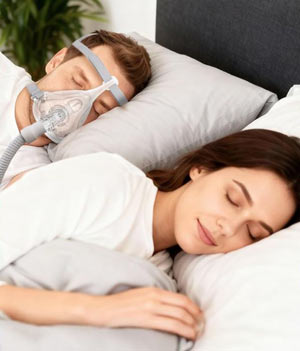 critical care & sleep medicine) at Yale School of Medicine (YSM) and director of the Yale Center for Sleep Medicine.
He became especially interested in studying sleep-disordered breathing, with a focus on the different health implications of sleep apnea for different people. It can produce symptoms like excessive daytime sleepiness. It can also affect cognitive function, particularly executive function, decision making, and impulsivity. It has been linked with mental health, anxiety, and depression.
“And from a chronic disease outcome, it has been linked with heart attack, stroke, high blood pressure, and diabetes, so some of the leading causes of morbidity and mortality in this country,” said Yaggi, who is also the vice chief of research for the Section of Pulmonary, Critical Care & Sleep Medicine at YSM
About one in eight people globally have some form of sleep apnea. Sleep apnea causes breathing to stop and start several times during sleep. This happens because either your airway is blocked, known as obstructive sleep apnea, or you brain isn’t controlling your breathing as it should, known as central sleep apnea.
For decades, the main form of treatment for this population has been the continuous positive airway pressure (CPAP) machine, which helps keep a person’s airways open while they sleep. That way, they’re able to receive the oxygen you need. But CPAP doesn’t work for every patient.
But new technologies are emerging, Yaggi says. In an interview, he explains how some of these new treatments work, how technology is changing diagnosis of sleep apnea, and the importance of patient choice when deciding which treatment is best for them.
The interview has been edited for length and clarity.
For years, CPAP therapy has been the most common treatment for sleep apnea. What other treatments are now available?
Klar Yaggi: It has really expanded dramatically, and we have a number of devices in the space now. One that is commonly used is known as an oral appliance or a mandibular advancement device, and the options that have been best studied are fabricated by a dentist. For those, a dentist takes an impression of a person’s bite, and the patient pops them in before sleep like a retainer. They bring the lower jaw and protrude it forward; by doing that, it opens up space in the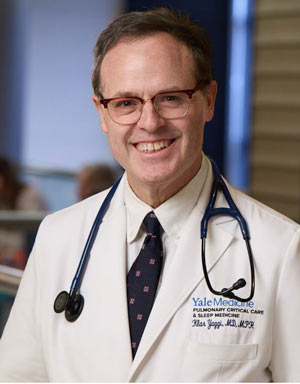 back of the airway and can very effectively treat snoring and mild to moderate sleep apnea.
Klar Yaggi Photo courtesy of Yale School of Medicine
Another device, which has been FDA-approved for more severe sleep apnea, is called “Inspire” therapy. It works through upper airway neurostimulation and is usually for patients who aren’t able to use or tolerate CPAP therapy. It’s a device that is implanted much like a pacemaker under the skin in the chest. It senses when you’re inspiring through the chest wall, and then stimulates the hypoglossal nerve that causes the muscles of the upper airway to contract and open the airway when you’re inspiring.
So, CPAP therapy, the oral appliance, and Inspire therapy are the main treatments we use today. But what has been really exciting is the move toward pharmacologic treatments for obstructive sleep apnea.
You just mentioned pharmacologic treatments. So sleep apnea can now be treated with medication?
Yaggi: Last year was the first time we saw an FDA-approved medication for the treatment of sleep apnea, and it’s one of the GLP-1 agonists called tirzepatide, or Zepbound. A large randomized, controlled trial showed a significant improvement in sleep apnea, largely mediated through weight loss, associated with this medication.
We’re prescribing a lot of these medications in clinic right now. Weight gain is a big risk factor for sleep apnea because it causes the upper airway to encroach [due to increased weight around the neck and upper body]. Medicines like tirzepatide can result in up to 20% weight reduction. Based on previous studies of medical and surgical weight loss, we know that 10 to 20% weight reduction can really cut the severity of sleep apnea in half, and in some patients, eliminate the sleep apnea.
How is technology changing the diagnosis of sleep apnea, whether we’re talking about artificial intelligence or wearables like smart watches?
Yaggi: We have a large number of patients coming into our clinic because their smartwatch or Fitbit is telling them they’re not sleeping very well, or their oxygen level is decreasing at night. This has been really helpful because sleep apnea, although so prevalent worldwide, is still very underdiagnosed and undertreated.
We’ve already started implementing AI technologies in diagnosing sleep apnea, and it’s been really helpful. Historically, sleep studies are often seven or eight hours long; they produce continuous physiologic signal data and technologists score the study in these 30-second intervals. AI has helped to speed that up tremendously in terms of identifying potential measures that the techs can either agree or disagree with. It’s still important to have a human oversee these studies, but AI is speeding up our ability to score sleep tests.
These new advances give patients more choices: What should they keep in mind when choosing which sleep apnea treatments are best for them?
Yaggi: One size doesn’t fit all, right? CPAP therapy is really effective, but not everybody can wear it. Some people absolutely love it. About 50 to 60% of patients get to the point where they can’t sleep without it. They feel so much better, and they find it very easy to wear. But almost half of our patients really struggle with this therapy. Having treatment alternatives is important.
