


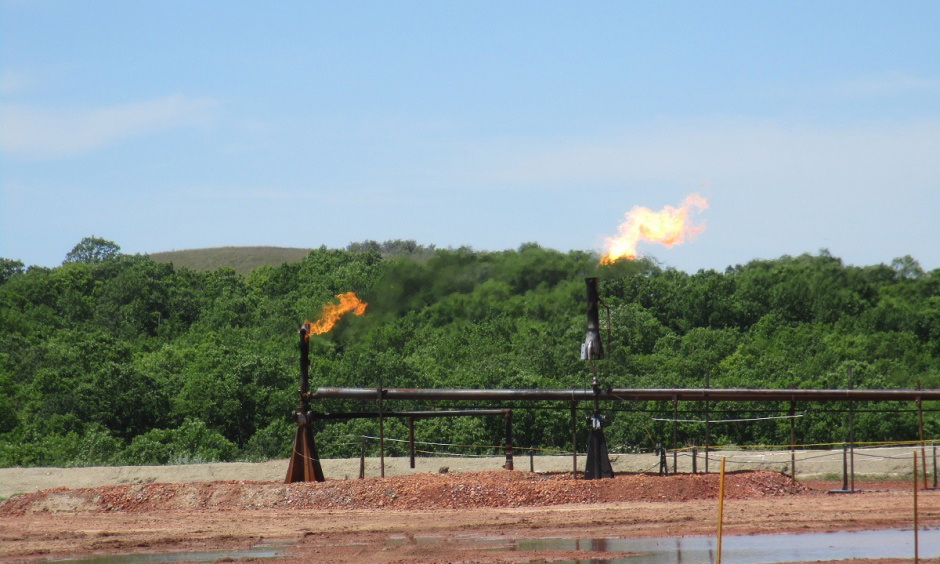
Gas Flaring Credit: BLM
July 26, 2026 - WASHINGTON, D.C. — On Friday, U.S. Senator Alex Padilla (D-Calif.), a member of the Energy and Natural Resources Committee, alongside Ranking Member of the House Natural Resources Committee Jared Huffman (D-Calif.-02), Senator Adam Schiff (D-Calif.), and Representatives Lateefah Simon (D-Calif.-12), John Garamendi (D-Calif.-08), and Ro Khanna (D-Calif.-17), called on the Government Accountability Office (GAO) to investigate the Trump Administration’s use of emergency national defense authorities and taxpayer funds to subsidize commercial coal infrastructure.
In a letter to the GAO Acting Comptroller General Orice Williams Brown, Padilla and his colleagues expressed concerns over the Department of Energy’s plan to use up to $425 million in Defense Production Act (DPA) funds to support coal-fired power plants and construct the West Gateway Terminal Project in Oakland, California. This terminal project would primarily serve foreign commercial markets, rather than meet national emergency needs.
“The DPA was intended to scale up domestic industrial capabilities to meet urgent military or national emergency needs; therefore, its invocation to construct a commercial, civilian export facility intended primarily to serve foreign commercial markets raises profound statutory, legal, and fiscal questions,” wrote the lawmakers. “We do not believe this satisfies the statutory definition of ‘national defense’ or ‘critical infrastructure protection’ under the DPA and that there is no legally sufficient, data-driven nexus between civilian coal exports and immediate U.S. military readiness or critical infrastructure defense.”
DPA funds are intended for U.S. national security and defense readiness. The Trump Administration is instead diverting these funds to support a commercial export project that primarily benefits private industries and foreign markets in East Asia.
“Congress has never appropriated funds to the DOE’s DPA account with the intent of propping up a dying industry or financing a purely commercial project,” continued the lawmakers. “We are deeply concerned that DOE has improperly diverted funds from accounts intended by Congress for the critical modernization and resilience support of our nation’s grid to instead finance a commercial fossil fuel export project.”
Padilla also raised concerns that the Trump Administration has improperly diverted funds designated for critical grid modernization and may be using emergency authorities to circumvent local environmental protections.
“With no clear national security nexus, we question whether the DOE utilized emergency DPA authorities with the intent of preempting or subverting valid local health ordinances and environmental regulations. If so, this would be a gross departure from the intent of the DPA,” concluded the lawmakers.
The lawmakers requested the GAO review the Trump Administration’s use of DPA funds to support coal projects and whether the Department acted within the authority Congress provided under the law.
Full text of the letter is available here and below:
Dear Acting Comptroller Williams Brown,
We write to request that the Government Accountability Office (GAO) examine the Department of Energy’s (DOE) efforts to use up to $425 million in Defense Production Act (DPA) Title III funds to support coal-fired power plants and the construction of the West Gateway Terminal Project (also referred to as the Oakland Bulk and Oversized Terminal) in Oakland, California.
On June 4, 2026, the Administration announced it would utilize emergency authorities under Title III of the DPA (50 U.S.C. § 4533) as part of a broader effort to subsidize commercial coal infrastructure. The DPA was intended to scale up domestic industrial capabilities to meet urgent military or national emergency needs; therefore, its invocation to construct a commercial, civilian export facility intended primarily to serve foreign commercial markets raises profound statutory, legal, and fiscal questions.
We do not believe this satisfies the statutory definition of “national defense” or “critical infrastructure protection” under the DPA and that there is no legally sufficient, data driven nexus between civilian coal exports and immediate U.S. military readiness or critical infrastructure defense
Under the DPA, the President’s authority to create, maintain, or expand domestic industrial capacity is strictly bound to actions that support the “national defense.” Section 702(14) of the Act defines national defense as “programs for military and space production or construction, military assistance to any foreign nation, stockpiling, space, and critical infrastructure protection and restoration.” However, the DOE’s stated justification for this award is to expand West Coast capacity to ship American coal to commercial markets in the Indo-Pacific region. Furthermore, Title III of the DPA dictates that the President cannot obligate funds to expand industrial capacity unless the President formally determines that the material or service is critical to the national defense, that U.S. industry cannot reasonably provide the capability in a timely manner, or that this action is the most cost-effective method of meeting the need.
Additionally, the Purpose Statute (31 U.S.C. § 1301) dictates that “appropriations shall be applied only to the objects for which the appropriations were made.” Congress has consistently appropriated funds to the DOE’s DPA account with the legislative intent of strengthening advanced manufacturing, grid components (such as large power transformers), and critical mineral supply chains. Congress has never appropriated funds to the DOE’s DPA account with the intent of propping up a dying industry or financing a purely commercial project. We are deeply concerned that DOE has improperly diverted funds from accounts intended by Congress for the critical modernization and resilience support of our nation’s grid to instead finance a commercial fossil fuel export project
Lastly, the West Gateway Terminal project has been the subject of intensive, decade long environmental and health litigation, driven by municipal bans on coal handling enacted to protect local communities from severe particulate pollution. With no clear national security nexus, we question whether the DOE utilized emergency DPA authorities with the intent of preempting or subverting valid local health ordinances and environmental regulations. If so, this would be a gross departure from the intent of the DPA.
Therefore, we request that you review the DOE’s use of DPA to support coal, including:
- How the DOE utilized DPA authorities to support the production, use, and export of coal, and
- The extent to which the DOE followed policies and procedures and utilized quality information and analysis in making determinations and selections with respect to supported DPA coal projects.
As part of the review, we ask that you consider internal communications, economic assessments, and legal memoranda generated by the DOE’s Office of Manufacturing and Energy Supply Chains and the White House regarding this project selection.
Sincerely,
Source: Senator Alex Padilla
