


Schiff highlights the role federal funding played in our nation’s greatest scientific discoveries, emphasizes how cuts will trigger billions in lost economic activity
August 5, 2026 - Washington, D.C. – U.S. Senator Adam Schiff (D-Calif.) has called on President Trump and his administration 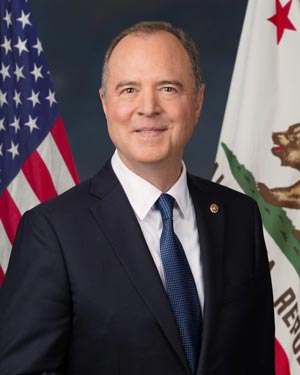 to end their repeated attacks on science and research funding – underscoring that cuts to critical federal investments have been detrimental to U.S. innovation and have impacted research on new discoveries, including life-saving drug research and space exploration.
“Without robust federal funding and prioritization of our scientific workforce, we are at grave risk of ceding influence and power to our competitors abroad,” Senator Schiff wrote in a new letter to President Trump.
Schiff points out that cuts to federal science funding will ultimately lead to higher prices for millions of Americans, greater job insecurity across industries, loss in scientific talent to our competitors abroad, and a decline in the United States’ status as a world leader in science and innovation.
“The economic impact of these cuts for all Americans will be sweeping, leading to higher prices and greater job insecurity across industries. Researchers across U.S. research universities estimate $2.8 billion in overall economic losses from disrupted NIH and NSF grants…Current projections suggest that a 25 percent cut to federal R&D spending would lower GDP by a rate comparable to that witnessed during the Great Recession,” Senator Schiff wrote.
The administration’s 22% cut to science funding in its FY2026 Budget request would amount to half a trillion dollars in lost economic activity.
“With this growing uncertainty, our country’s STEM programs and scientific workforce are shrinking rapidly, impacting not only our economy but also the U.S.’s ability to lead in scientific innovation at a global scale. At the beginning of 2026, over 10,000 people with STEM PhDs had lost or left their jobs due to federal workforce cuts,” the Senator continued.
“As President of the United States, it is your responsibility to ensure that our economy and our workforce continue to flourish, and that our nation retains its competitive edge. Without significant investments in higher education institutions and in the students and faculty members who make these institutions great, the United States will backslide behind our competitors – a risk we cannot afford to take,” the Senator concluded.
The full text of the letter can be found here and below.
Dear President Trump,
We write to express our deep concern regarding your administration’s continued attacks on science and research funding. Federal investments in science are critical to new discoveries across sectors, from life-saving drug research and development to space exploration. This innovation brings a tremendous return on taxpayer investment, bolstering the American economy and solidifying our nation’s long-held position as a leader in STEM. Without robust federal funding and prioritization of our scientific workforce, we are at grave risk of ceding influence and power to our competitors abroad.
The U.S. is a global scientific leader, driving innovations that fuel economic growth and directly improve the lives of all Americans. In 2023, three U.S.-based scientists won the Nobel Prize in chemistry for their discovery of quantum dots, research used to identify cancer cells, detect radiation during military operations, and improve energy efficiency. U.S.-led discoveries like this are only made possible through federal support for research activities in medicine, national security, and technology. The Congressional Budget Office (CBO) recently concluded that every dollar of federal non-defense research and development investment creates as much as $12.50 in economic growth over the following 30 years by encouraging capital expenditures and job creation. These investments have been estimated to account for at least one-fifth of the growth in U.S. total factor productivity, a measure of technological innovation and scientific discoveries, since World War II.
Unfortunately, your administration has sought deep cuts to scientific funding and laid off thousands of federally employed scientists, despite public outcry and strong urging from the public, universities, and industries to preserve support for science across the American scientific community. Notably, the National Science Foundation (NSF) terminated about $1 billion in grants and fired 10 percent of its workforce. Further, the total number of new NSF grants in 2025 fell by 25 percent relative to the average of the previous 10 years. At the National Institutes of Health (NIH), your administration canceled grants amounting to more than $1.8 billion. In your proposed FY2026 budget, you recommended a 35 percent cut for non-defense research and development. Recent projections estimate that your administration’s FY2027 budget proposal will translate to 150,000 NIH and NSF jobs lost. These decisions run counter to Congress’s historical support for public funding of scientific research, and Congress has been persistent in demanding your administration halt preemptive cuts to federal programs and abide by Congress’ set funding levels for the current and future fiscal years to prevent irrevocable harm to America’s economy and workforce.
The economic impact of these cuts for all Americans will be sweeping, leading to higher prices and greater job insecurity across industries. Researchers across U.S. research universities estimate $2.8 billion in overall economic losses from disrupted NIH and NSF grants. After you released your FY2026 Budget Request, the CBO similarly suggested that your administration’s requested 22 percent cut to science funding would amount to half a trillion dollars in lost economic activity. This defunding would have catastrophic effects. Current projections suggest that a 25 percent cut to federal R&D spending would lower GDP by a rate comparable to that witnessed during the Great Recession. American families simply cannot afford to take such a devastating step backwards.
With this growing uncertainty, our country’s STEM programs and scientific workforce are shrinking rapidly, impacting not only our economy but also the U.S.’s ability to lead in scientific innovation at a global scale. At the beginning of 2026, over 10,000 people with STEM PhDs had lost or left their jobs due to federal workforce cuts. Students across the nation report the loss of federal grants, such as the NASA Space Technology Graduate Research Opportunities and the NSF Graduate Research Fellowship Program, as the primary reason why they and many of their colleagues have been forced to leave research and academia, constituting a significant loss for the country in institutional knowledge and expertise. On top of this, roughly 60 percent of colleges and universities reported decreases in international student enrollment. This decrease is in line with recent reports that doctoral and postdoctoral students are losing hope in pursuing their careers in the U.S. One survey indicates that there has been a 21 percent decline in the number of doctoral and postdoctoral students likely to continue their careers in the U.S. These early-career scientists, referred to by some as “the canary in the coal mine,” are just the first signal of a long-term threat to America’s scientific leadership, which could take a generation to rebuild.
As research funding runs out in the U.S., other nations are capitalizing on this tenuous moment in our history by actively recruiting our country’s best and brightest. China and countries in Europe, for example, are offering hundreds of millions of dollars in research funding to leading American academics and scientists, promising them stable and consistent funding streams. These offers provide a lifeline to those who have been hit with sudden grant freezes and award denials. Researchers who the United States has invested in for years are now taking their expertise abroad. Funding interruptions will continue to seriously impair our ability to compete on an international stage, especially as China surpassed the U.S. in R&D expenditures and in scientific publications in 2024. Without a robust pipeline of researchers and scientists, our economic stability as well as our status as a world leader in scientific discovery will undoubtedly decline.
As President of the United States, it is your responsibility to ensure that our economy and our workforce continue to flourish, and that our nation retains its competitive edge. Without significant investments in higher education institutions and in the students and faculty members who make these institutions great, the United States will backslide behind our competitors – a risk we cannot afford to take.
Source: Senator Adam Schiff
