

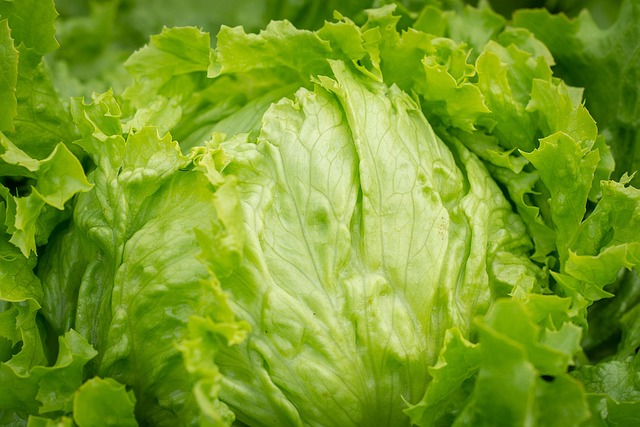
Lettuce Image by Petra from Pixabay
Related: KFF: The FDA’s Retraction of a Positive Test in the Cyclosporiasis Outbreak, Linked To Shredded Iceberg Lettuce, Raises Questions About Corrections and Trust
U.S. House Democrat Demands Answers from Taylor Farms on National Cyclospora Outbreak and Attempts to Influence FDA Investigation, Says, “Taylor Farms Met Privately With The White House The Night The FDA Identified Their Lettuce As The Source”
August 19, 2026 - By Caleb Hampton - California lettuce was not implicated in a sprawling cyclospora outbreak that sickened thousands of people and made frequent headlines this summer. But farmers in the state are shouldering much of the economic pain as wary consumers ditch lettuce and other fresh produce.
“It’s been really bad,” said Ryan Kelly, vice president and general manager of Salinas-based Boutonnet Farms in Monterey County.
On July 17, the U.S. Food and Drug Administration identified shredded iceberg lettuce from a Taylor Farms facility in Mexico as a possible source of the outbreak. The product was pulled from stores and restaurants after the company initiated a recall. But for many consumers, doubts about the safety of fresh produce persisted.
Last month, lettuce prices declined 16.4%, the largest month-over-month drop on record, according to the U.S. Bureau of Labor Statistics. Meanwhile, market research firm NielsenIQ reported that from July 18 to Aug. 8, sales of iceberg lettuce fell 25.4% and prepacked salads dipped 34.2%.
During summer, Mexico typically ships a small amount of lettuce to the U.S. market. The vast majority is supplied by farmers on California’s Central Coast, who in the weeks following the outbreak suffered most of the economic consequences as demand plummeted for leafy greens.
Growers in the Salinas Valley and beyond said they were left with little choice but to destroy about a third of their lettuce crops that were ready to harvest.
“Anything that was planted for open market sales is getting run back into the ground,” said Kelly, who grows vegetables throughout the valley for the region’s shippers, which supply fresh produce to major retailers.
Since mid-July, he said, the collapse in lettuce sales had erased Boutonnet Farms’ entire profit margin for the year.
“It’s across the board, throughout the industry,” said Tony Alameda of Top Flavor Farms and Sabor Farms, who grows vegetables in Monterey and San Benito counties.
In 2024, California lettuce sales totaled about $3.7 billion, according to the California Department of Food and Agriculture.
Dick Peixoto, owner of Watsonville-based Lakeside Organic Gardens in Santa Cruz County, said it was frustrating to see sales vanish despite his farm being nowhere near the suspected source of the outbreak.
“We have as much relationship to Taylor Farms’ bagged salads as we do to Oscar Mayer wieners,” the vegetable grower said. Nonetheless, Peixoto spent the past few weeks laying off harvest crews and plowing under his lettuce.
“There’s no other option,” he said.
Broad impacts
It isn’t only leafy greens that consumers are avoiding.
Dave Puglia, president and CEO of the Western Growers Association, said the scope of fresh produce affected by the outbreak’s fallout was “broader than one might think,” possibly due to early news coverage speculating about types of produce linked to past cyclospora outbreaks.
“A lot of that speculation landed on fresh berries, which are completely disassociated from this outbreak but suffering the same volume of sales declines as every other category impacted,” Puglia said.
According to NielsenIQ, from July 14 to Aug. 1, sales of strawberries dropped 14.7%, blackberries 16.4% and raspberries 28.1%, while fresh produce sales on the whole declined 9.9% from July 18 to Aug. 8. Fresh berry production is also concentrated on California’s Central Coast.
Farmers said the downturn in produce sales will have far-reaching impacts. Each year, the Salinas Valley’s roughly seven-month-long vegetable season attracts tens of thousands of workers to not only harvest crops but work in processing, trucking and other ancillary services.
“It’s going to be very painful for the Salinas Valley farming community,” Kelly said. “It has a lot of implications if it continues.”
His farm already had orders for October canceled, he said, and he suspected the fallout could last even longer.
Meanwhile, Puglia said time was running out for farmers in Southern California and Arizona, where vegetable production shifts during winter, to make planting decisions, purchase seeds and secure work crews to prepare their fields.
“When the market is this disrupted, it’s very difficult to plan your acreage,” he said. “We just don’t know what demand is going to look like by the time those vegetables are ready to harvest.”
Food safety
Farmers said the crisis in consumer confidence caused by the cyclospora outbreak was the most severe they had experienced since a 2006 E. coli outbreak that was linked to California-grown spinach.
The event prompted growers and shippers in the state to form the California Leafy Green Products Handler Marketing Agreement. The voluntary agreement, which covers virtually all of the state’s commercial production, established rigorous food safety rules, traceback and recall protocols, and mandatory government audits for participating farms and handlers.
Other fresh produce commodity groups have established similar food safety standards, which are continuously updated.
“The preponderance of the produce supply is very safe,” said Trevor Suslow, a food safety consultant and emeritus professor at the University of California Cooperative Extension.
But despite producers’ efforts, Suslow said, consumers can still struggle to navigate food-borne outbreaks.
“It’s very difficult for individuals to really know how they might be exposed,” he said. “It’s easier to just say, ‘Well, I’m not going to take a chance. I’m not going to buy any of it.’”
According to experts, the benefits of eating fresh produce far outweigh the risks.
Suslow said characteristics specific to cyclospora make the parasite hard to detect and kill—factors that may have stymied investigators this summer and worsened confusion among consumers.
As of this week, an FDA investigation into the source of the outbreak remained ongoing.
“It hasn’t been possible to have that smoking gun moment,” said Suslow, who has consulted on food safety for Taylor Farms—among other produce companies—and last month visited the farms and processing facility in Mexico implicated in the outbreak.
He said it was possible—even likely—the cyclospora outbreak did not come from fresh produce at all and instead stemmed from cyclospora endemic to the U.S. that survived wastewater treatment.
Regardless of the actual source, Suslow said, when a produce category is rightly or wrongly implicated, “That consumer confidence can take years to recover.”
Puglia said that while the food safety standards farms adhere to are posted publicly, the cyclospora outbreak showed “there is a need to open the doors wider and give consumers greater visibility into the food safety practices and standards we have developed.”
Farmers markets
The shift in consumer behavior hasn’t harmed everyone. Sales of frozen and canned products increased as some shoppers opted for processed alternatives, according to NielsenIQ. Others have sought vendors that offer a shorter, more local and more transparent supply chain.
“Farmers markets are experiencing their glory right now,” said Randii MacNear, who manages seven markets in Yolo, Sacramento and Placer counties.
MacNear said demand for lettuce was booming, with customers reserving orders in advance and showing up to markets at the crack of dawn.
“You can’t keep it on the stand,” she said.
Federico Toledo, owner of Lodi-based Toledo Farms, said lettuce was mostly out of season in San Joaquin County, but he was coaxing a few plants along in the shade of a tree to supply marketgoers who told him they had become skeptical of storebought produce.
“They’re looking for it,” Toledo said of his locally grown leafy greens.
While no food is completely free of risk, MacNear said it makes a difference to people who shop at her markets when they can hear directly from a farmer.
“They know who grew their food,” she said. “It’s all right there in front of you.”
Caleb Hampton is an editor at Ag Alert. He can be reached at champton@cfbf.com.
California Farm Bureau works to protect family farms and ranches as part of a nationwide network representing more than 5 million Farm Bureau members. Learn more at www.cfbf.com or follow @cafarmbureau on Instagram, LinkedIn, X, or Facebook.
Source: California Farm Bureau
