


Image by Devon Breen from Pixabay
- Foreign beef importers gain while ranchers lose immediately. Waiving the 26.4% tariff on 300,000 MT of beef delivers foreign sellers an estimated $650 million reduction in tariffs for foreign-sourced beef trimmings, just as ranchers sell calves at prices $300 to $400 per head below levels from two months earlier.
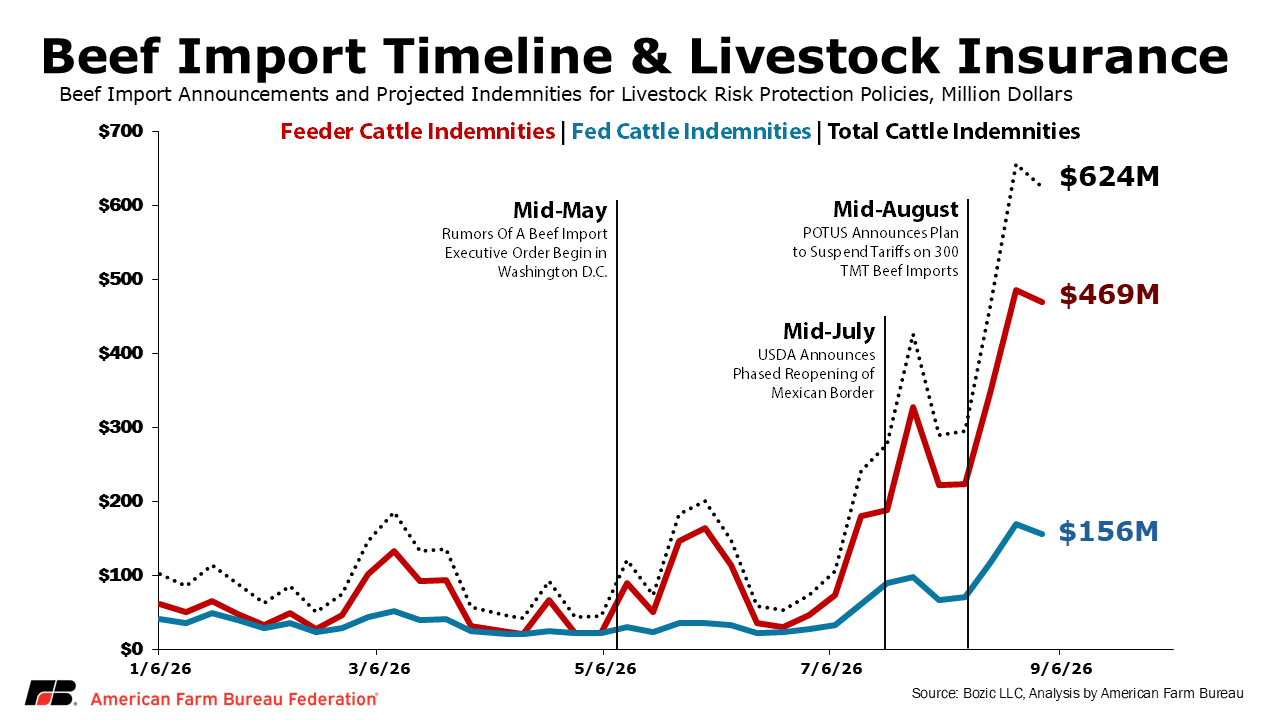
- The Federal Crop Insurance Corporation is now on the hook too. Due largely to nontraditional risks, i.e., federal intervention to influence prices, projected livestock crop insurance indemnities have jumped over 400%, from approximately $100 million in mid-May to more than $624 million by Sept. 1, with much of that cost increase expected to fall on the Federal Crop Insurance Corporation and Approved Insurance Providers.
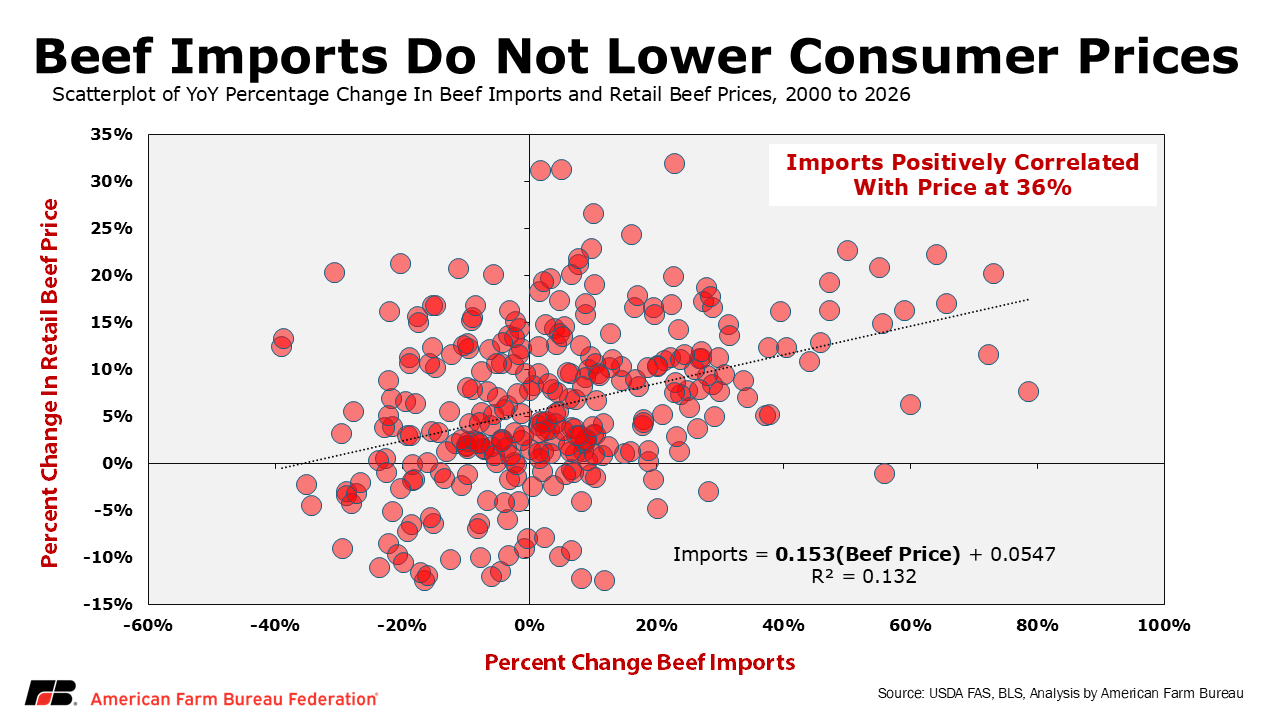
- Consumer savings aren't guaranteed. There is a positive correlation between beef imports and retail beef prices – meaning additional imports are unlikely to lower consumer beef prices. Additionally, nothing in the proclamation compels retailers to lower prices, and supply-chain and ad-cycle lead times mean any benefit would take weeks to reach grocery store shelves, if it arrives at all.
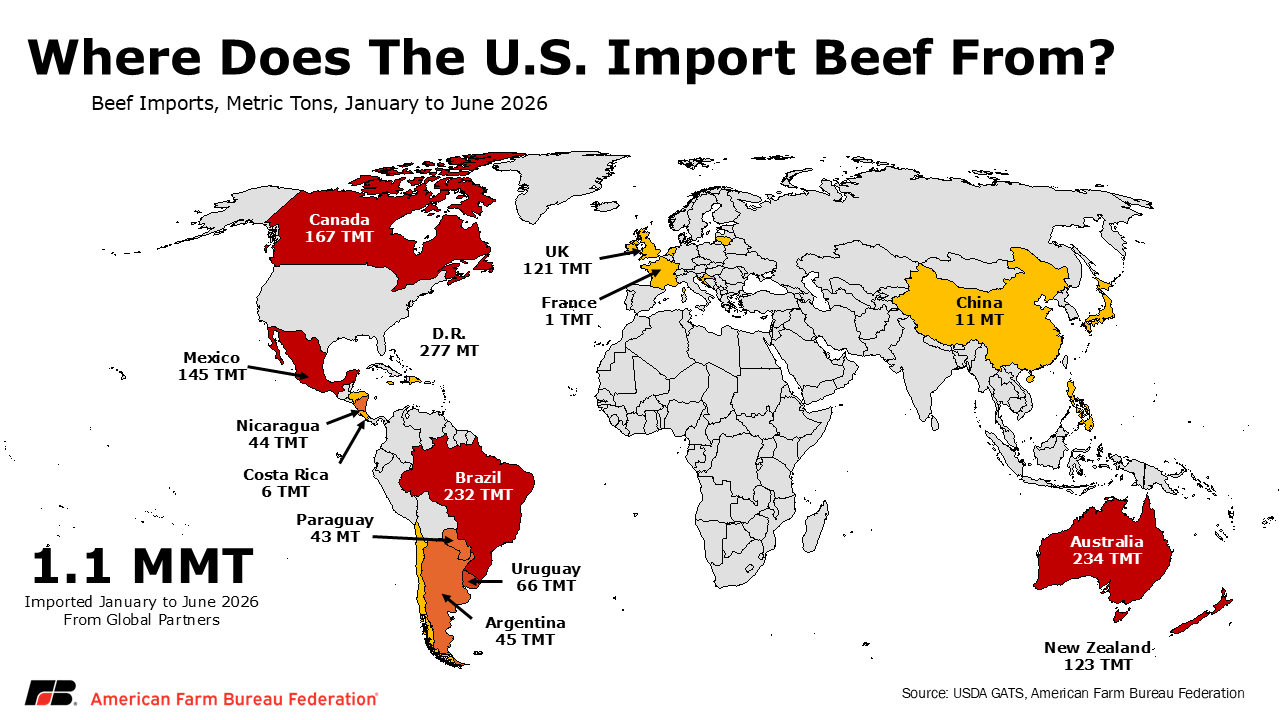
September 5, 2026 - By John Newton, Ph.D., Vice President of Public Policy and Economic Analysis - In late August, President Trump issued a proclamation temporarily expanding the tariff-rate quota (TRQ) for lean beef trimmings by 300,000 metric tons – equivalent to more than 660 million pounds of beef. This move effectively suspends the 26.4% tariff on out-of-quota beef imports and opens the door to a substantial surge of imported beef over the coming months – at the same time hundreds of thousands of ranchers are marketing their calves into the fall selling window. Beef imports to the U.S. through the first half of 2026 are record high at more than 1.1 million metric tons, and up 12% over prior year levels.
The Unbalanced Rancher and Importer Tradeoff
The additional 300,000 metric tons are allocated across four specific tariff lines: fresh or chilled certified-organic lean beef trimmings, fresh or chilled lean beef trimmings classified as "other," and their frozen counterparts. According to USDA’s Foreign Agriculture Service (FAS), through the first half of 2026, beef imports under these tariff lines have totaled more than $3 billion on just over 370 thousand metric tons – with an average import value of nearly $8,200 per metric ton or $3.71 per pound.
Importantly, by raising the TRQ for the 300,000 metric tons, the out-of-quota tariff rate of 26.4% is effectively waived. With an estimated current market value of $2.5 billion for 300,000 metric tons of beef trimmings, the waived tariff amount equates to nearly $650 million in waived tariffs for foreign-sourced beef – at the expense of hard-working American ranchers who are now selling calves at prices that are $300 to $400 below prices just two months ago.
Crop Insurance Picks Up the Tab Too
While importers receive millions in tariff relief and ranchers see their bottom line erode, taxpayers are stepping up through the Federal Crop Insurance Corporation (FCIC). USDA’s FCIC provides crop insurance coverage on hundreds of millions of acres of crops, specialty crops, pasture, hogs and milk each year, but also on millions of feeder and fed cattle through the Livestock Risk Protection (LRP) program.
LRP, first made available in 2003, provides actuarially sound risk management coverage against the decline in market price for feeder and fed cattle and has grown in popularity among ranchers since 2018’s Bipartisan Budget Act increased its availability to ranchers. According to the most recent data from Bozic LLC, ranchers paid over $1 billion in premiums for LRP feeder and fed cattle coverage during reinsurance year 2026, which included sales through June 2026. In mid-May, when news of a beef import plan began to take shape, feeder and fed cattle prices were about 15% to 20% higher than today and projected indemnities totaled just over $120 million, with an average loss ratio of 13%.
Now that the presidential proclamation has been incorporated into market price expectations, projected LRP indemnities have increased sharply. As of Sept.1, projected LRP feeder and fed cattle indemnities for RY2026 had climbed to a combined $624 million – an increase of over 400% for each plan of insurance and a loss ratio approaching 60%. Much of that indemnity burden falls on the FCIC. For FCIC and ranchers, the losses are likely to continue to mount as cattle prices face downward price pressure.
Importantly, the losses are not driven by traditional market risk factors such as a decline in demand, or increases in supply, but instead the price declines are largely driven by federal intervention efforts to manipulate and artificially lower prices by incentivizing imports. For ranchers that purchased a LRP plan of insurance, indemnities will provide some risk management support, but it does not restore the confidence needed to rebuild America’s beef cow herd given the ongoing federal efforts to lower cattle and beef prices.
An Unknown Experiment
While the administration's rationale centers on lower consumer prices of ground beef – there is no economic evidence that the price for ground beef at the retail or food service levels will see any price relief due to additional imports. In fact, the economic evidence suggests the opposite. Data from USDA’s FAS on beef imports and data from the Bureau of Labor Statistics on retail ground beef prices shows a positive relationship between beef prices and imports over the last quarter century – as beef prices rise, imports follow.
Additionally, nothing in the proclamation compels grocery stores or food service providers to lower prices. There's no enforcement tool to ensure the $650 million in tariff relief will materialize as lower consumer prices. Every link in the supply chain, e.g., importers, processors, distributors, retailers or food service providers, will independently decide how much of the cost savings from eliminated tariffs to pass through to consumers versus absorbing it as (profit) margin.
From a supply chain perspective, before reaching consumers, imported beef must move through several steps along the supply chain including but not limited to export processing and booking at the foreign packing plant, transportation to the U.S. (unless it is in a bonded warehouse on U.S. shores), clearance through Customs and Border Protection, USDA food safety inspections, and distribution to processors for blending. Then, because groceries and restaurants lock in pricing and promotional cycles months in advance, menu boards, price tags and circulars are typically finalized well before the product physically arrives, adding one more lag before any cost change can potentially reach the consumer.
What is known is there has already been an impact on ranchers and their bottom lines – eroding their confidence in rebuilding America’s beef cow herd. What is also known is importers are likely to see reduced tariff levies of approximately $650 million, and insurance providers and USDA’s FCIC are on the hook for millions more in crop insurance indemnities. Finally, it’s also known that as beef prices rise, imports follow – indicating that these additional imports are highly unlikely to lower consumer beef prices.
Source: American Farm Bureau Federation
