


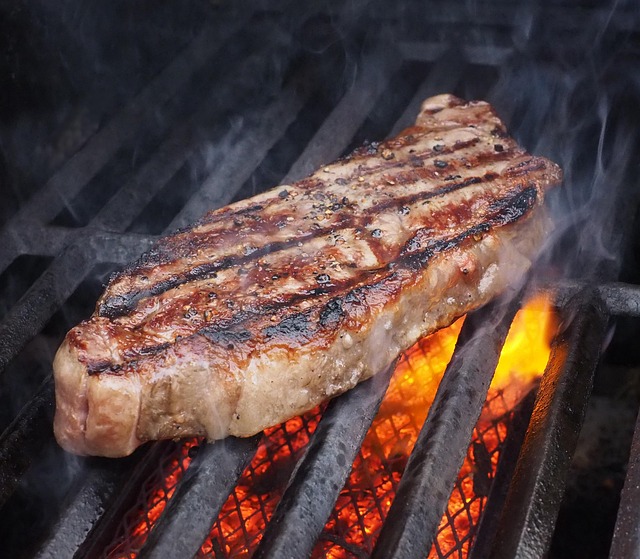
Image by Devon Breen from Pixabay
October 24, 2026 - By Jordan Shaked - In a study published Oct. 19 in Cell, Yale researchers identified a previously unknown mechanism by which a nutrient abundant in red meat and commonly used in exercise supplements may amplify inflammation.
The molecule, L-carnitine, also occurs naturally in the body, and reaches high concentrations in skeletal muscle. It is best known for promoting fat metabolism, explains Eric Elliott, MD, PhD, assistant professor of medicine (infectious diseases) at Yale School of Medicine (YSM) and first author of the study.
“L-carnitine helps transport fats into mitochondria so they can be broken down for energy,” Elliott says. “In simpler terms, it has become synonymous with fat burning, which is why it has also gained prominence as an exercise and weight-loss supplement.”
Tracing L-carnitine’s role in sepsis
The discovery emerged from the researchers’ investigation of metabolic changes during sepsis, a life-threatening condition in which the body’s response to infection damages its own tissues and organs.
“Sepsis is incredibly challenging,” Elliott says. “Patients with sepsis can become critically ill, and among patients with sepsis treated in intensive care units, some studies report mortality rates approaching 40%.”
Much of the harm caused by sepsis can result from a dysregulated inflammatory response rather than an inability to control the infection itself, Elliott explains.
The researchers exposed mice to lipopolysaccharide (LPS), a bacterial component commonly used to model the inflammation seen during sepsis. Following LPS exposure, blood levels of L-carnitine fell substantially, the researchers found.
“We predicted giving carnitine back to these animals might improve their outcomes, but they actually did much worse,” Elliott says. “That told us the reduction in carnitine was an adaptive response.”
That unexpected result led the team to investigate how L-carnitine was worsening outcomes. Experiments in mouse and human immune cells revealed that L-carnitine activated the pyrin inflammasome, part of the cell’s internal alarm system. This set off an inflammatory cascade involving IL-17, an inflammatory signaling molecule, that increased mortality in the mice.
The findings may offer a new direction for sepsis research, an area in which treatment advances have been limited.
“We have made frustratingly little progress in improving sepsis treatment beyond learning how to better deliver fluids, antibiotics, and medications that support blood pressure,” Elliott says.
One potential target is IL-17. “What was particularly striking was how detrimental IL-17 was in this model,” Elliott says. The team is interested in exploring whether blocking IL-17 could eventually benefit a subset of patients with sepsis, although that possibility remains to be studied.
Beyond sepsis: Muscle injury and chronic disease
Andrew Wang, MD, PhD, associate professor of medicine (rheumatology, allergy & immunology) and of immunobiology at YSM and senior author of the study, says the findings raise new questions about whether the same pathway contributes to other inflammatory diseases.
“There is tantalizing genetic evidence that the pathway we uncovered could be contributing to inflammation in a variety of diseases, particularly diseases in which muscle involvement has perhaps been thought to be a casualty of the disease rather than a potential driver,” Wang says.
The researchers found evidence supporting this idea in rhabdomyolysis, a condition in which damaged skeletal muscle rapidly breaks down and releases its contents into the bloodstream, potentially causing acute kidney injury.
In a mouse model of rhabdomyolysis, L-carnitine transport and activation of the pyrin inflammasome contributed to inflammation, suggesting that immune cells may interpret L-carnitine released by damaged muscle as a warning signal.
The pathway may also be relevant to chronic inflammatory conditions such as cardiovascular disease, inflammatory bowel disease, and cancer, although further research is needed to determine whether it contributes to these diseases.
What the findings mean—and don’t mean—for diet
The findings also raise questions about dietary L-carnitine. People who eat a typical omnivorous diet obtain most of their L-carnitine through food, while vegetarians and vegans tend to produce more of it within the body and have lower levels overall. However, Elliott emphasizes that the study examined L-carnitine in isolation—not red meat or supplements—and does not show that consuming either causes inflammation.
“We did not study red meat as a whole, and carnitine by itself did not induce inflammation,” Elliott says. “A substantial background of inflammation was required, and we do not yet know what inflammatory context might produce this effect in people. We cannot say that carnitine supplementation or heavy red meat consumption is always harmful. It is probably safe most of the time, but there may be specific circumstances in which it becomes a problem.”
Moving forward, the researchers hope to better understand how individual dietary components interact with a person’s underlying health and inflammatory state.
“Food science currently exists in the realm of phenomenology,” Wang says. “I think that a deep understanding of all the elements that make up food, akin to a periodic table, will be required to understand what makes a ‘good’ or ‘bad’ diet for a particular individual in a particular health state.”
The Department of Internal Medicine at Yale School of Medicine is among the nation's premier departments, bringing together an elite cadre of clinicians, investigators, educators, and staff in one of the world's top medical schools. To learn more, visit Internal Medicine.
Source: Yale School of Medicine
