


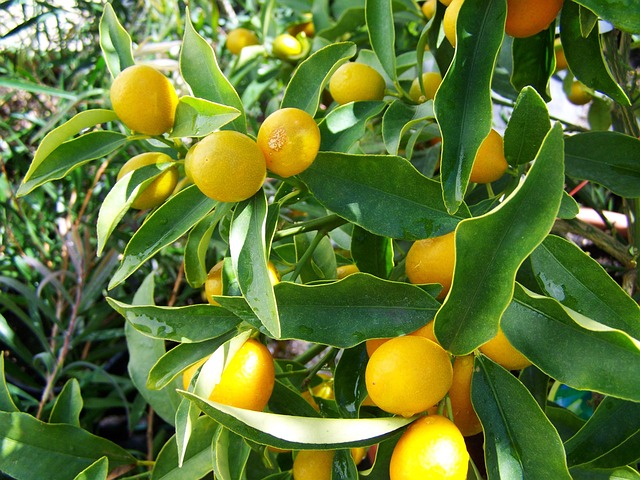
Image by Anna Armbrust from Pixabay
June 7, 2025 - By Rob McCarthy - Lemons prices have not returned to the robust levels growers and marketers saw before the pandemic.
The depressed market has been particularly hard on coastal citrus fruit growers. Their lemon orchards are aging, and they face stiff competition from South America, which has younger and expanding lemon acres, said Craig Colton, who grows lemons and avocados in Ventura County, the state’s top lemon-growing region.
The investment needed to revitalize the region’s lemon sector is considerable, yet current profit margins don’t support it, he said. Seesaw weather conditions—two years of drought starting in 2020 followed by rain and flooding—led to a steady decline in fruit quality.
“It’s kind of a Catch-22,” Colton said.
Despite lean pricing, Central Valley citrus growers have managed to supply packinghouses with higher-quality fruit than what’s coming out of coastal areas, Colton said. The valley’s production also contributed to a glut of fruit that’s driving down prices and forcing growers to make hard choices.
“We haven’t been making anything on lemons since the pandemic,” he said. “Because of the age of our trees, wind damage and size issues, we can’t get the fruit quality the packinghouse is asking for.”
Ben Faber, University of California Cooperative Extension citrus farm adviser in Ventura County, said back-to-back years of heavy rain starting in 2022 weakened younger lemon trees in the region. Though most trees have recovered, prices have not, and thinner margins have convinced some coastal citrus growers to exit the lemon business.
“That’s why all the new avocado plantings,” Faber said. “I’m not sure if lemon prices will come back. Usually, it’s been cyclical, but this has been out of the ordinary.”
Some citrus growers have pulled out lemon trees and planted avocados or other citrus varieties.
Aaron Dillon, general manager of Four Winds Growers in Watsonville, said he has seen an exodus of lemons in Monterey County. Citrus growers who had planned to replant their coastal orchards canceled their orders this year, including a longtime grower who farms 900 acres and lost money for three straight years, he noted.
California lemon acreage stood at 52,725 in 2024, up from 51,592 acres in 2022.
A Ventura County orchard can produce up to 1,050 cartons of lemons per acre. However, it won’t all be sold as fresh. The current season projection is 70% going to fresh use at $18.50 FOB per carton, which is not enough to cover a grower’s $6,500-per-acre cost to grow the fruit, said John Eliot, exchange manager for the Saticoy Lemon Association in Ventura.
Grower Link Leavens of Moorpark said growers who maintain their orchards and follow best practices lose between $1,500 and $2,000 an acre on lemons.
California accounts for 95% of U.S. lemon production. Arizona supplies the remaining 5%.
There is some growth in the organic sector and for the top-selling Eureka and Lisbon varieties, said Cassie Howard, senior director of category management and marketing at Sunkist Growers.
As the weather warms, people start to think more about adding zest to their dishes, she added. Prices across all lemon sizes start to strengthen beginning in the spring, “traditionally a period of increased lemon usage among consumers,” Howard said.
Sunkist Growers saw an April sales bump of nearly 7% in conventional lemons compared to the same period a year ago. Organic fruit sales were even stronger, registering a 13% sales increase, the company said. In addition, Canada, Japan and South Korea continue to buy California-grown citrus.
“Export markets remain a vital part of our strategy, though they’ve faced headwinds,” Howard said. “The U.S. has seen some decline in lemon exports in recent seasons, with factors like global oversupply, increased competition and elevated shipping costs all playing a role.”
James Sayre, a UCCE specialist, said he thinks the Trump administration’s tariffs on imports will lead to increased lemon prices in the U.S., but they will come mostly during July to September when California production is at a low and imports are more prevalent.
“Given the strongly seasonal trends for lemon production and imports, I think there is a somewhat limited scope for these tariffs to expand domestic sales,” he added.
Canada, which remains the top export destination for California lemons, has imposed a 25% retaliatory tariff on U.S. lemons, and Sayre said he thinks the added duties “should slow exports” to the North American trading partner.
Compounding the challenges for California lemon growers is a threat from the Asian citrus psyllid, which can spread huanglongbing, or HLB, a fatal bacterial disease that’s transmitted when the pest feeds on infected plant tissue.
HLB has been detected in portions of Ventura, Los Angeles, Orange, Riverside, San Bernardino and San Diego counties.
While the threat to commercial citrus orchards remains, ACP populations are down, Faber said.
The state has eased restrictions on movement of fruit related to the psyllid. In March, the California Department of Food and Agriculture said citrus could be moved from any ACP quarantine zone to an HLB quarantine area for packing or processing without mitigation such as a preharvest treatment or field cleaning.
Rob McCarthy is a reporter in Ventura County. He can be reached at agalert@cfbf.com.
The California Farm Bureau works to protect family farms and ranches on behalf of more than 26,000 members statewide and as part of a nationwide network of 5.8 million Farm Bureau members.
Source: CFB
