


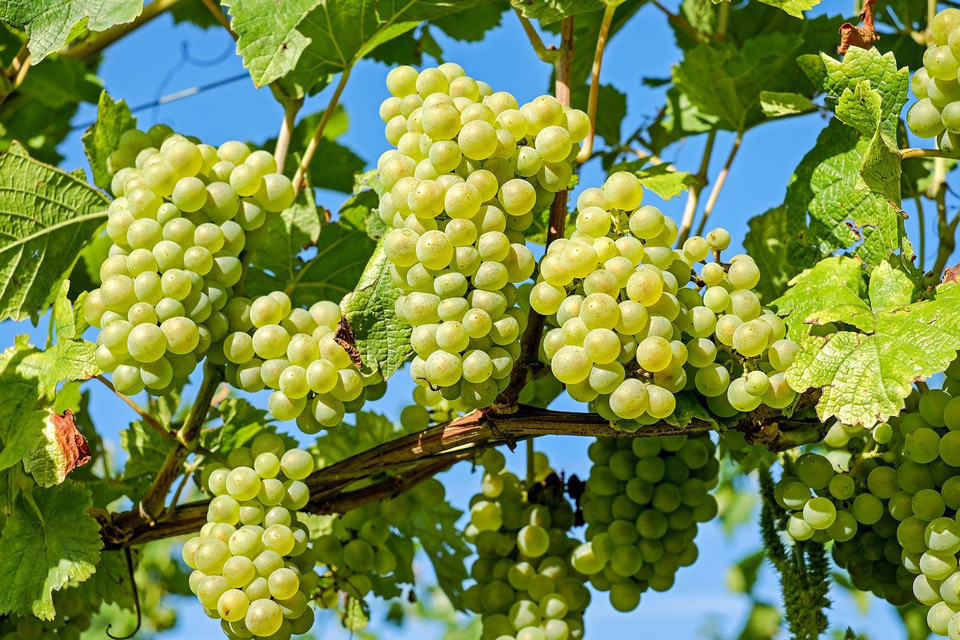
Image by Couleur on Pixabay
December 1, 2025 - By Caleb Hampton - California winegrape growers removed nearly 40,000 acres of vineyards—roughly 7% of the state’s winegrape acreage—between October 2024 and August 2025, according to a new report commissioned by the California Association of Winegrape Growers.
During the past few years, a steady decline in wine sales has devastated winegrape growers worldwide. In California, industry leaders have called on growers to reduce their acreage to correct for a persistent oversupply.
The 2025 Standing Winegrape Acreage report, which was conducted by Land IQ and released earlier this month, provided the most detailed view yet on the amount of acreage growers have removed and where they have taken out vines.
“We have a lot of information now about the acreage in the state, and we have a good basis and foundation to go forward now in having more accurate numbers and being able to make better predictions about where we’re going in the future,” Jeff Bitter, president of the grower-owned marketing group Allied Grape Growers, said this month during a winegrape association press conference.
As of August, the state’s winegrape acreage, including bearing and nonbearing vineyards, stood at 477,475 acres, according to the mapping project.
Growers in San Joaquin County, the nation’s top winegrape growing county, removed the most acreage during the past year, taking out nearly 8,000 acres of vineyards, about 12% of the county’s winegrape acreage.
San Joaquin County’s remaining acreage stood at more than 67,000, though growers said they suspect not all of it has been kept in production.
“I’m sure we have in Lodi a few thousand acres of that ,which is vineyards which had been abandoned or minimally farmed, which are likely going to come out in the next couple of years once money allows,” Sam Joaquin County grower Aaron Lange said during the press conference.
Fresno County saw the highest percentage of its acreage removed, with growers taking out more than 6,000 acres, roughly 18% of the county’s winegrape acreage.
Other counties that removed substantial vineyard acreage include Monterey, Napa and Sonoma.
Industry experts have attributed the weak wine market to multiple factors, including a shift in messaging from health experts about how safe it is to consume low levels of alcohol, the industry’s failure to win over younger demographics, and market share lost to seltzers, ready-to-drink cocktails and marijuana.
Bitter estimated California will need to remove another 50,000 acres to achieve market balance. But he said the acreage growers removed during the past couple years, combined with successive years of short crops, should help reduce inventory and stabilize the market.
“We made excellent strides, unfortunately, on the backs of growers who have left the grapes on the vine, toward a balanced market in the future,” he said. “This year could have gone a long way and helped us to get to a point of balance going forward.”
California growers harvested around 2.9 million tons of winegrapes last year, according to the U.S. Department of Agriculture, the lightest crop in two decades. As many as 400,000 tons were estimated to have been left on the vines as growers were unable to find buyers for their grapes.
Bitter said this year’s grape harvest could be even smaller—crop estimates of fewer than 2.5 million tons would make it the smallest in the past three decades—largely because of the amount of grapes that have gone unpicked.
There was “a whole lot of fruit that was left on the vine to rot,” Natalie Collins, president of the winegrape association, said during the press conference.
Lange, the San Joaquin County grower, estimated that at least 15% of the crop in the Lodi area was unpicked as of early November due to market conditions or weather damage.
“It’s no surprise that it was a very difficult year for growers,” Bitter said. “We saw difficulty even at the highest end of the market with regard to market activity, lack of buyers, grapes being unpurchased and unharvested.”
Caleb Hampton is editor of Ag Alert. He can be reached at champton@cfbf.com.
The California Farm Bureau Federation works to protect family farms and ranches on behalf of nearly 32,000 members statewide and as part of a nationwide network of more than 5.5 million Farm Bureau members.
Source: Reprinted with permission CFBF
